


Page 53 - GHES-2-2
P. 53
Global Health Econ Sustain                                    International scientific cooperation in public health


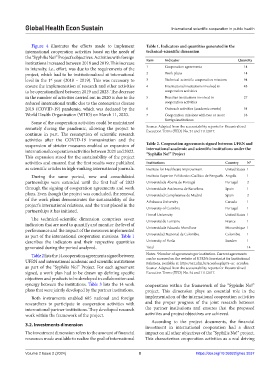
              Figure  4 illustrates the efforts made to implement   Table 1. Indicators and quantities generated in the
            international cooperation activities based on the needs of   technical‑scientific dimension
            the “Syphilis No!” Project’s objectives. Activities with foreign   Item  Indicator        Quantity
            institutions increased between 2018 and 2019. This increase
            in intensity, i.e., effort, was due to the requirements of the   1  Cooperation agreements   14
            project, which had to be institutionalized at international   2  Work plans                  14
            level in the 1  year (2018 – 2019). This was necessary to   3  Technical-scientific cooperation missions  94
                       st
            ensure the implementation of research and other activities   4  International institutions involved in   48
            to be operationalized between 2019 and 2023. The decrease   cooperation activities
            in the number of activities carried out in 2020 is due to the   5  Brazilian institutions involved in   27
            reduced international traffic due to the coronavirus disease   cooperation activities
            2019 (COVID-19) pandemic, which was declared by the   6    Outreach activities (academic events)  54
            World Health Organization (WHO) on March 11, 2020.  7      Cooperation missions with two or more   18
                                                                       foreign institutions
              Some of the cooperation activities could be maintained
            remotely  during  the  pandemic,  allowing  the  project  to   Source: Adapted from the accountability reports for Decentralized
                                                               Execution Terms (TED) No. 54 and 111/2017.
            continue in part. The resumption of scientific research
            activities after the COVID-19 immunization and the
            suspension of stricter measures enabled an expansion of   Table 2. Cooperation agreements signed between UFRN and
                                                               international academic and scientific institutions under the
            international cooperation activities between 2021 and 2022.   “Syphilis No!” Project
            This expansion stood for the sustainability of the project
            activities and ensured that the first results were published   Institutions          Country  N*
            as scientific articles in high-ranking international journals.  Institute for Healthcare Improvement  United States 1
              During the  same  period,  new  and  consolidated   Instituto Superior Politécnico Católico de Benguela Angola  1
            partnerships  were extended  until  the  first half  of  2023   Universidade Aberta de Portugal  Portugal  2
            through the signing of cooperation agreements and work   Universidade Autónoma de Barcelona  Spain  1
            plans. Even though the project was concluded, the renewal   Universidad Complutense de Madrid  Spain  2
            of the work plans demonstrates the sustainability of the   Athabasca University      Canada   1
            project’s international relations, and the trust placed in the
            partnerships it has initiated.                     University of Coimbra             Portugal  1
                                                               Drexel University                 United States 1
              The technical-scientific dimension comprises seven   Université de Lorraine        France   1
            indicators that are used to quantify and monitor the level of
            performance and the impact of the measures implemented   Universidade Eduardo Mondlane  Mozambique 1
            as part of the international cooperation missions. Table 1   Universidad Nacional de Colombia  Colombia  1
            describes the indicators and their respective quantities   University of Borås       Sweden   1
            generated during the period analyzed.              Total                                      14
              Table 2 lists the 14 cooperation agreements signed between   Notes: *Number of agreements per institution. Current agreements
            UFRN and international academic and scientific institutions   can be accessed on the website of UFRN’s Secretariat for Institutional
                                                               Relations, available at: https://sri.ufrn.br/acordos.php?a=ac_acordos.
            as part of the “Syphilis No!” Project. For each agreement   Source: Adapted from the accountability reports for Decentralized
            signed, a work plan had to be drawn up defining specific   Execution Terms (TED) No. 54 and 111/2017.
            objectives and products to be developed in collaboration and
            synergy between the institutions. Table 3 lists the 14 work   cooperation within the framework of the “Syphilis No!”
            plans that were jointly developed by the partner institutions.  project. This dimension plays an essential role in the
              Both instruments enabled 685 national and foreign   implementation of the international cooperation activities
            researchers to participate in cooperation activities with   and the proper progress of the joint research between
            international partner institutions. They developed research   the partner institutions and ensures that the proposed
            work within the framework of the project.          activities and project objectives are achieved.
                                                                 According  to  the project documents,  the  financial
            3.2. Investments dimension
                                                               investment in  international cooperation  had a  direct
            The investment dimension refers to the amount of financial   impact on all other objectives of the “Syphilis No!” project.
            resources made available to realize the goal of international   This characterizes cooperation activities as a real driving


            Volume 2 Issue 2 (2024)                         8                        https://doi.org/10.36922/ghes.3037

