


Page 52 - GHES-2-2
P. 52
Global Health Econ Sustain                                    International scientific cooperation in public health


               locations, institutions, users, access profiles, and   the  scope of  the  respective  cooperation.  These are  (i)
               approval of link requests.                      exploratory missions, (ii) missions with signed cooperation
            (iii) Institutional Relations Supervisor: responsible for   agreements or work plans, and (iii) missions that include
               approving access requests, managing technical notes   any international cooperation activity related to the project.
               (creation, editing, changes, approval, delegation   Exploratory missions aim to prospect possible
               management, backlogs, and export), managing work   international cooperation activities to be developed
               plans (creation, approval, and update), and individual   within the project. Such missions are aimed at the future
               mission reports (approval, product management,   development of new research, joint actions, or the signing
               and backlogs). General Mission Coordinator: full   of new cooperation agreements and work plans. This is
               and complete oversight of the management of all   an essential activity to consolidate institutionalization,
               technical notes, work plans, and individual mission   internationalization, and  cooperation between  the
               reports. They are the only users authorized to cancel
               an approved technical note.                     institutions and researchers involved.
            (iv)  Institutional Relations Operator: responsible for   Missions with signed cooperation agreements or
               monitoring the individual mission reports in relation   work plans are activities to carry out planned activities
               to the project management reports and for the   to achieve the objectives, and products agreed with the
               registration  and  authorization  of  applications  and   partner institutions.
               other administrative activities related to the mission.  The missions which include other types of cooperation
            (v)  Mission Leader: responsible for monitoring the work plan   activity comprise various cooperation  efforts.  They are
               of the research mission, for which he/she is responsible.  characterized by occasional international activities, such
            (vi) Mission  Staff:  researchers  from  partner  institutions   as laboratory visits and the development of specific studies
               who  are members  of  the  delegation,  with  the  same   related to the project’s objectives, participation in scientific
               rights as the mission researcher, except for the   events, conferences, and the presentation of papers, among
               registration of proposals for technical notes.  other technical-scientific activities.
              In SIRI, the process of an international cooperation
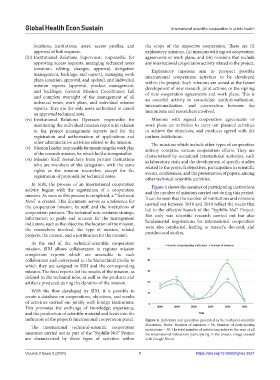
                                                                 Figure 4 shows the number of participating institutions
            activity  begins  with  the  registration  of  a  cooperation   and the number of missions carried out during this period.
            mission. As soon as this process is completed, a “Technical   It can be seen that the number of institutions and missions
            Note” is created. This document serves as a reference for   carried out between 2018 and 2019 reflect the needs that
            the cooperation mission, its staff, and the institutions of   led to the effective launch of the “Syphilis No!” Project.
            cooperation partners. The technical note contains strategic   Not only was scientific research carried out but also
            information to guide and account for the management   fundamental negotiations for international cooperation
            indicators, such as the objective, the location of the mission,
            the researchers involved, the type of mission, related   were also conducted, leading to master’s, doctoral, and
            projects, the context, and a justification for the mission.  postdoctoral studies.
              At the end of  the technical-scientific  cooperation
            mission, SIRI allows collaborators to register mission
            completion reports which are accessible to each
            collaborator and correspond to the hierarchical profile to
            which they are assigned in SIRI and the corresponding
            mission. The final reports list the results of the mission, as
            defined in the technical note, as well as the products and
            artifacts produced during the duration of the mission.
              With the flow developed by SIRI,  it is  possible  to
            create a database on cooperations, objectives, and results
            of activities carried out jointly with foreign institutions.
            This promotes the exchange of knowledge, experience,
            and the production of scientific material and feeds into the
            indicators of the project’s international cooperation panel.  Figure 4. Indicators and quantities generated in the technical-scientific
              The international technical-scientific cooperation   dimension. Notes: Number of missions = 94; Number of participating
                                                               institutions = 36. The total number of institutions refers to the sum of all
            measures carried out as part of the “Syphilis No!” Project   the international institutions participating in the project. Image created
            are characterized by three types of activities within   with Google Sheets.


            Volume 2 Issue 2 (2024)                         7                        https://doi.org/10.36922/ghes.3037

