


Page 67 - GHES-2-4
P. 67
Global Health Economics and
            Sustainability
                                                                                Assessing Vietnam’s pandemic lockdown


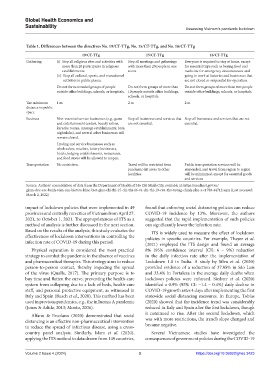
            Table 1. Differences between the directives No. 19/CT‑TTg, No. 15/CT‑TTg, and No. 16/CT‑TTg
                                    19/CT‑TTg                  15/CT‑TTg                  16/CT‑TTg
            Gathering    (i)   Stop all religious rites and activities with   Stop all meetings and gatherings   Everyone is required to stay at home, except
                           more than 20 participants in religious   with more than 20 people in one   for essential trips such as buying food and
                           establishments.             room.                    medicine for emergency circumstances and
                         (ii)   Stop all cultural, sports, and recreational     going to work at factories and businesses that
                            activities in public places.                        are not closed or suspended for operation.
                         Do not form crowded groups of people   Do not form groups of more than   Do not form groups of more than two people
                         outside office buildings, schools, or hospitals. 10 people outside office buildings,   outside office buildings, schools, or hospitals.
                                                       schools, or hospitals.
            The minimum   1 m                          2 m                      2 m
            distance in public
            space
            Business     Non-essential service businesses (e.g., game   Stop all businesses and services that  Stop all businesses and services that are not
                         and entertainment centers, beauty salons,   are not essential.  essential.
                         karaoke rooms, massage establishments, bars,
                         nightclubs), and several other businesses will
                         remain closed.
                         Trading and service businesses such as
                         wholesalers, retailers, lottery businesses,
                         hotels, lodging establishments, restaurants,
                         and food stores will be allowed to reopen.
            Transportation  No restriction.            Travel will be restricted from   Public transportation services will be
                                                       pandemic-hit areas to other   suspended, and travel from region to region
                                                       localities.              will be minimized, except for essential goods
                                                                                and services
            Source: Authors’ consolidation of data from the Department of Health of Ho Chi Minh City, available at: https://medinet.gov.vn/
            giam-doc-cac-benh-vien-can-biet/su-khac-biet-giua-chi-thi-15-chi-thi-16-va-chi-thi-19-cua-thu-tuong-chinh-phu-s-c1780-44712.aspx (Last accessed:
            March 2, 2022)

            impact of lockdown policies that were implemented in 49   found that enforcing social distancing policies can reduce
            provinces and centrally run cities of Vietnam from April 27,   COVID-19  incidence  by 13%.  Moreover,  the  authors
            2021, to October 1, 2021. The appropriateness of ITS as a   suggested that the rapid implementation of such policies
            method of analysis is further discussed in the next section.   can significantly lower the infection rate.
            Based on the results of the analysis, this study evaluates the   ITS is widely used to measure the effect of lockdown
            effectiveness of lockdown interventions in controlling the   policies  in specific countries. For example, Thayer  et al.
            infection rate of COVID-19 during this period.     (2021) employed the ITS design and found an average
              Physical separation is considered the most practical   8% (95% confidence interval [CI]: 6 – 9%) reduction
            strategy to combat the pandemic in the absence of vaccines   in the daily infection rate after the implementation of
            and pharmaceutical therapies. This strategy aims to reduce   Lockdown 1.0  in  India.  A  study  by  Silva  et al.  (2020)
            person-to-person contact, thereby impeding the spread   provided evidence of a reduction of 37.85% in São Luís
            of the virus (Qualls, 2017). The primary purpose is to   and 33.4% in Fortaleza in the average daily deaths when
            buy time and flatten the curve, preventing the health-care   lockdown policies were enforced. Siedner  et al. (2020)
            system from collapsing due to a lack of beds, health-care   identified a 0.9% (95% CI: −1.4 – 0.4%) daily decline in
            staff, and personal protective equipment, as witnessed in   COVID-19 growth rates 4 days after implementing the first
            Italy and Spain (Busch et al., 2020). This method has been   statewide social distancing measures. In Europe, Tobías
            used in previous pandemics, e.g., the influenza A pandemic   (2020) showed that the incidence trend was considerably
            (Jones & Adida, 2013; Monto, 2006).                reduced in Italy and Spain after the first lockdown, though
              Alfano & Ercolano (2020) demonstrated that social   it continued to rise. After the second lockdown, which
            distancing is an effective non-pharmaceutical intervention   was with more restrictions, the trend’s slope changed and
            to reduce the spread of infectious disease, using a cross-  became negative.
            country panel analysis. Similarly, Islam  et al. (2020),   Several  Vietnamese  studies  have  investigated  the
            applying the ITS method to data drawn from 149 countries,   consequences of government policies during the COVID-19


            Volume 2 Issue 4 (2024)                         3                        https://doi.org/10.36922/ghes.3423

