


Page 69 - GHES-2-4
P. 69
Global Health Economics and
            Sustainability
                                                                                Assessing Vietnam’s pandemic lockdown


            days since the date on which intervention j occurred. In   “effect size” (Harrer et al., 2021). Given that some degree of
            Equation II, the β  coefficient represents the difference in   between-study heterogeneity is almost always expected, it
                          zj
            the slope due to intervention j compared to the slope due   is common practice in many fields, including medicine and
            to intervention (j – 1).                           the social sciences, to use a random-effects model (Harrer
              For illustration, Table 3 describes the dataset used in   et al., 2021). Therefore, to adhere to this common practice,
            the ITS model for Dong Thap province, which had two   we employed a random-effects meta-analysis to aggregate
            interventions on July 11, 2021, and July 19, 2021.  the results and analyze comparative efficacy based on
                                                               several factors (e.g., government directive, region).
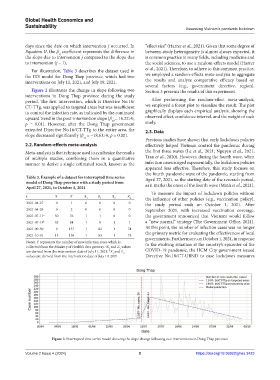
              Figure 2 illustrates the change in slope following two   Section 3 presents the results of this experiment.
            interventions in Dong Thap province during the study
            period. The first intervention, which is Directive No.16/  After performing the random-effect meta-analysis,
            CT-TTg, was applied to targeted areas but was insufficient   we employed a forest plot to visualize the result. The plot
            to control the infection rate, as indicated by the continued   graphically displays each empirical analysis, showing the
            upward trend in the post-intervention slope (β = 16.22>0,   observed effect, confidence interval, and the weight of each
                                                 z0
            p = 0.01). However, after the Dong Thap government   study.
            extended Directive No.16/CT-TTg to the entire area, the   2.3. Data
            slope decreased significantly (β = −18.63>0, p = 0.00).
                                     z1
                                                               Previous studies have shown that early lockdown policies
            2.2. Random-effects meta-analysis                  effectively helped Vietnam control the pandemic during
            Meta-analysis is the technique used to synthesize the results   the first three waves (Le et al., 2021; Nguyen et al., 2021;
            of multiple studies, combining them in a quantitative   Tran et al., 2020). However, during the fourth wave, when
            manner to derive a single estimated result, known as the   infection cases surged exponentially, the lockdown policies
                                                               appeared less effective. Therefore, this study focuses on
                                                               the fourth pandemic wave of the pandemic, starting from
            Table 3. Example of a dataset for interrupted time series   April 27, 2021, as the starting date of the research period,
            model of Dong Thap province with a study period from
            April 27, 2021, to October 1, 2021                 as it marks the onset of the fourth wave (Minh et al., 2021).
                                                                 To measure the impact of lockdown policies without
            t           Y      T     X     Z     X     Z
                                      1     1     2     2      the influence of other policies (e.g., vaccination policy),
            2021-04-27   0     1     0     0     0      0      the study period ends on October 1, 2021. After
            2021-04-28   0     2     0     0     0      0      September  2021,  with  increased  vaccination  coverage,
            2021-07-11 a  50   76    1     1     0      0      the government announced that Vietnam would follow
            2021-07-19 b  53   84    1     9     1      1      a “new normal” strategy (The Government Office, 2021).
            2021-09-30   9    157    1     82    1     74      At this point, the number of infection cases was no longer
            2021-10-01  13    158    1     83    1     75      the primary metric for evaluating the effectiveness of local
                                                               governments. Furthermore, on October 1, 2021, in response
            Notes: Y represents the number of new infection cases which is   to the evolving situation at the country’s epicenter of the
            collected from the Ministry of Health’s data gateway.  X  and Z  values
                                              a
                                                    1
                                               1
            are derived from the intervention date of July 11, 2021.  X  and Z   2  COVID-19 pandemic, the HCM City government issued
                                               b
                                                 2
            values are derived from the intervention date of July 19, 2021  Directive No.18/CT-UBND to ease lockdown measures


                       Figure 2. Interrupted time series model showing the slope change following two interventions in Dong Thap province


            Volume 2 Issue 4 (2024)                         5                        https://doi.org/10.36922/ghes.3423

