


Page 73 - GHES-2-4
P. 73
Global Health Economics and
            Sustainability
                                                                                Assessing Vietnam’s pandemic lockdown


            of cases continued to increase daily even after Directive   3.2.1. Comparative analysis based on geographical
            No.16/CT-TTg was applied, reaching a peak of 345 cases   locations
            on September 5, 2021, with an average daily increase of   Table 4 presents the meta-analysis results of interventions
            0.64 cases.                                        grouped by their region. Except for the Southeast area,
              It is worth noting that when Directive No.16/CT-TTg   which was the epicenter of the fourth pandemic wave,
            was  implemented  in  these  provinces,  the  number  of   all other regions exhibited negative pooled effect results.
            new infections was still relatively low compared to other   This finding indicates that the policy interventions were
            South-east provinces. Therefore, it cannot be concluded   generally effective in these regions.
            that the local governments were slow in executing the   Figure  7 illustrates the meta-analysis results for the
            interventions, as seen in Binh Duong or Dong Nai.   South-east region. Despite the strictest directive (Directive
            However, the testing efforts were ineffective, as infections   No.16/CT-TTg) being implemented across all cities and
            were not detected promptly, allowing the virus to spread   provinces in this region, most policy interventions were
            within the population.                             ineffective, as indicated by positive post-intervention slope
            3.2. Discussion on policy implementation           change values. Notable exceptions were Directive No.11/
            effectiveness                                      CT-UBND in HCM City (intervention code HCM-CT11-1)
                                                               and Directive No.16/CT-TTg applied in Tay Ninh province
            This study focused on the coefficient representing the post-  (intervention code TayNinh-CT16-2), both of which had
            intervention slope change value to analyze the effectiveness   significant  effects.  The  post-intervention  slope  change
            of  policy  interventions.  The  results  of  these  coefficients   was −59.14 (95% CI: −86.7 – −31.58) for HCM-CT11-1
            were synthesized and classified into different groups. In   and -9.98 (95% CI: −55.18 – 12.34) for TayNinh-CT16-2.
            Section 3, the first subsection analyzes the results based on
            geography, while the second subsection groups the results   In contrast to the South-east, the Northern Midlands
            based on policy characteristics.                   and Mountains areas and the Central Highlands provinces
                                                               managed to keep the pandemic under control, as indicated
            Table 4. Meta‑analysis results: Policy interventions based on   by pooled effect results of −0.1 (95% CI: −0.74 – 0.54) and
                                                                                                   2
            their region                                       −0.15  (95%  CI:  −0.55  –  0.25), respectively.   A  common
                                                               characteristic of these provinces is their sparse population
            Region          Pooled effect   95% confidence   I  (%)  density, which hinders the spread of the virus and makes it
                                                      2
                               result      interval            easier for authorities to implement containment measures.
            Northern Midlands   −0.1       −0.74 – 0.54    85  Therefore,  local  administrations in  these  provinces  only
            and Mountain                                       needed to apply Directive No.16/CT-TTg to targeted areas
            Red river delta    −0.02       −0.32 – 0.28    87  to control the pandemic effectively.
            North-central and   −0.25      −0.99 – 0.49    87    The situation in the Red River Delta and North-Central
            central coastline
            Central highlands  −0.15       −0.55 – 0.25    62  and Central Coastline was similar to that of the Northern
                                                               Midlands and Mountains areas and the Central Highlands
            Southeast               0.36  −11.62 – 12.34    86
            Mekong river delta  −0.11      −0.56 – 0.34  50%   2    The results are not reported here to conserve space but
            Source: Authors’ work                                 available upon request.


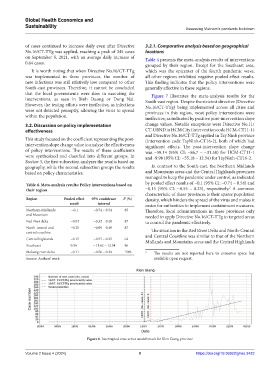
                                      Figure 6. Interrupted time series model result for Kien Giang province


            Volume 2 Issue 4 (2024)                         9                        https://doi.org/10.36922/ghes.3423

