


Page 64 - GHES-3-2
P. 64
Global Health Economics and
            Sustainability
                                                                         Implementation of payment exemption in Cameroon


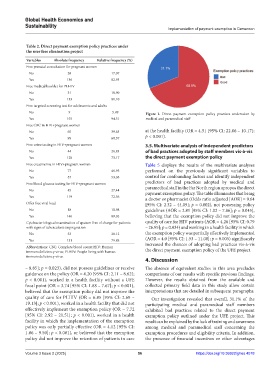
            Table 2. Direct payment exemption policy practices under
            the user fees elimination project
            Variables   Absolute frequency  Relative frequency (%)
            Free prenatal consultation for pregnant women
             No               28                17.07
             Yes             136                82.93
            Free medical booklet for PLHIV
             No               31                18.90
             Yes             133                81.10
            Free targeted screening test for adolescents and adults
             No               9                  5.49          Figure  1. Direct payment exemption policy practices undertaken by
             Yes             155                94.51          medical and paramedical staff
            Free CBC in HIV+pregnant women
             No               65                39.63          at the health facility (OR = 4.51 [95% CI: 22.06 – 10.17];
             Yes              99                60.37          p < 0.001).
            Free urine testing in HIV+pregnant women           3.5. Multivariate analysis of independent predictors
             No               44                26.83          of bad practices adopted by staff members vis-à-vis
             Yes             120                73.17          the direct payment exemption policy
            Free creatinemia in HIV+pregnant women             Table  5  displays the results of the multivariate analyses
             No               77                46.95          performed on the previously significant variables to
             Yes              87                53.05          control for confounding factors and identify independent
            Free blood glucose testing for HIV+pregnant women  predictors of bad practices adopted by medical and
             No               45                27.44          paramedical staff in the Far North region apropos the direct
                                                               payment exemption policy. The table illuminates that being
             Yes             119                72.56          a doctor or pharmacist (Odds ratio adjusted [AOR] = 9.64
            Offer free viral load                              [95% CI: 2.32 – 44.09]; p = 0.002), not possessing policy
             No               18                10.98          guidelines (AOR = 2.81 [95% CI: 1.02 – 7.86]; p = 0.045),
             Yes             146                89.02          believing that the exemption policy did not improve the
            Cytobacteriological examination of sputum free of charge for patients   quality of care for HIV patients (AOR = 4.26 [95% CI: 0.79
            with signs of tuberculosis impregnation            – 26.95]; p = 0.034) and working in a health facility in which
             No               33                20.12          the exemption policy was partially effectively implemented
                                                               (AOR = 4.0 [95% CI: 1.53 – 11.08]; p = 0.005) significantly
             Yes             131                79.88
                                                               increased the chances of adopting bad practices vis-à-vis
            Abbreviations: CBC: Complete blood count; HIV: Human   the direct payment exemption policy of the UFE project.
            immunodeficiency virus; PLHIV: People living with human
            immunodeficiency virus.
                                                               4. Discussion
            – 8.85]; p = 0.023), did not possess guidelines or receive   The absence of equivalent studies in this area precludes
            guidance on the policy (OR = 4.20 [95% CI: 2.11 – 8.62];   comparisons of our results with specific previous findings.
            p < 0.001), worked in a health facility without a UFE   However, the results obtained from the available and
            focal point (OR = 3.74 [95% CI: 1.88 – 7.67]; p < 0.001),   collected primary field data in this study allow certain
            believed that the exemption policy did not improve the   interpretations that are detailed in subsequent paragraphs.
            quality of care for PLHIV (OR = 6.85 [95% CI: 2.69 –   Our  investigation  revealed  that  overall,  31.1%  of  the
            19.13]; p < 0.001), worked in a health facility that did not   participating medical and paramedical staff members
            effectively implement the exemption policy (OR = 7.72   exhibited bad practices related to the direct payment
            [95% CI: 2.92 – 21.51]; p < 0.001), worked in a health   exemption policy outlined under the UFE project. This
            facility in which the implementation of the exemption   result can be explained by the lack of training and awareness
            policy was only partially effective (OR = 4.12 [95% CI:   among medical and paramedical staff concerning the
            1.86 – 9.50]; p < 0.001), or believed that the exemption   exemption procedures and eligibility criteria. In addition,
            policy did not improve the retention of patients in care   the presence of financial incentives or other advantages


            Volume 3 Issue 2 (2025)                         56                       https://doi.org/10.36922/ghes.4078

