


Page 136 - GHES-3-3
P. 136
Global Health Economics and
            Sustainability
                                                                                 Polyvictimization and suicidal behaviors


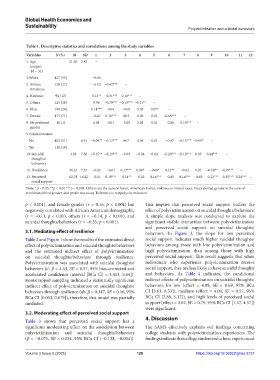
            Table 1. Descriptive statistics and correlations among the study variables
            Variables    N (%)  M   SD   1      2     3     4     5      6     7     8     9     10    11  12
            1.  Age           21.56 2.83  −
              (ranges:
               18 – 31)
            2.White     427 (55)        −0.04   –
            3.  African   128 (17)      −0.02 −0.42***  –
              American
            4. Hispanic  94 (12)        0.12** −0.31*** −0.16***  –
            5. Others   125 (16)         9.06  −0.30*** −0.13*** −0.11**  –
            6. Male     184 (28)        0.14***  0.04  −0.02  0.05  0.07*  –
            7. Female   474 (71)        −0.07  0.16***  0.03  0.02  0.01  −0.68***  –
            8.  No preferred   10 (1)    0.01  0.01  −0.02  0.03  0.01  −0.06  −0.14***  –
              gender
            9. Polyvictimization
             No         402 (51)   0.44 −0.09** −0.13***  0.07  0.04  0.01  −0.07  −0.15*** −0.09*  –
             Yes        138 (18)
            10.  Suicidal      3.81  7.56 −0.15** −0.19***  −0.03  −0.04  0.02  −0.20*** −0.18***  0.03  0.44***  –
              thoughts/
              behaviors
            12.  Resilience   36.24 7.37  −0.02  −0.01  0.13***  0.08*  −0.08*  0.12**  −0.02  0.01  −0.10** −0.29***  –
            13.  Perceived    62.78 16.42  −0.01  0.19***  −0.11**  −0.02 −0.14***  −0.05  0.16***  −0.05 −0.22*** −0.35*** 0.24*** –
              social support
            Note. *p < 0.05. **p < 0.01 ***p < 0.001. Others are the sum of Asian, American Indian, Eskimo, or mixed races. No preferred gender is the sum of
            nonbinary/third gender, and prefer not to say. Reference is nonpolyvictimization.

            p < 0.001), and female gender (r  = 0.16, p < 0.001) but   This implies that perceived social support buffers the
            negatively correlated with African American demographic   effect of polyvictimization on suicidal thoughts/behaviors.
            (r = −0.11, p < 0.01), others (r = −0.14, p < 0.001), and   A  simple slope  analysis  was  conducted  to explore  the
            suicidal thoughts/behaviors (r = −0.35, p < 0.001).  significant visible interaction between polyvictimization
                                                               and perceived social  support on suicidal thoughts/
            3.1. Mediating effect of resilience                behaviors.  In  Figure  2,  the  slope  for  low  perceived
            Table 2 and Figure 1 show the results of the estimated direct   social support indicates much higher suicidal thoughts/
            effect of polyvictimization and suicidal thoughts/behaviors   behaviors among those with low polyvictimization and
            and the estimated indirect effect of polyvictimization   high polyvictimization than among those with high
            on suicidal thoughts/behaviors through resilience.   perceived social support. This result suggests that when
            Polyvictimization was associated with suicidal thoughts/  individuals who experience polyvictimization receive
            behaviors (c’: β = 4.53, SE = 0.57, 95% bias-corrected and   social support, they are less likely to have suicidal thoughts
            accelerated confidence interval [BCa CI = 3.413, 5.64]).   and behaviors. As  Table  4 indicates, the conditional
            Bootstrapped sampling indicated a statistically significant   indirect effects of polyvictimization on suicidal thoughts/
            indirect effect of polyvictimization on suicidal thoughts/  behaviors for low (effect = 4.98, SE = 0.69, 95% BCa
            behaviors through resilience (ab: β = 0.347, SE = 0.16, 95%   CI [3.63, 6.33]), medium (effect = 4.00, SE = 0.57, 95%
            BCa CI [0.053, 0.679]); therefore, this model was partially   BCa CI [2.88, 5.12]), and high levels of perceived social
            mediated.                                          support (effect = 3.02, SE = 0.79, 95% BCa CI [1.47, 4.57])
                                                               were significant.
            3.2. Moderating effect of perceived social support
                                                               4. Discussion
            Table  3  shows that perceived social support has a
            significant moderating effect on the association between   The  SAMS effectively explains our  findings  concerning
            polyvictimization and suicidal thoughts/behaviors   college students with polyvictimization experiences. The
            (β = −0.071, SE = 0.034, 95% BCa CI [−0.138, −0.004]).   findings indicate that college students who have experienced


            Volume 3 Issue 3 (2025)                        128                       https://doi.org/10.36922/ghes.3737

