


Page 137 - GHES-3-3
P. 137
Global Health Economics and
            Sustainability
                                                                                 Polyvictimization and suicidal behaviors


            Table 2. Standardized bootstrapped effects: mediating effect   Table 4. Conditional indirect effect analysis at values of the
            of polyvictimization on suicidal thoughts/behaviors  moderator
                                                95% BCa CI     Moderator: perceived social         95% BCa CI
                                        β (SE)  Lower  Upper   support                 Effect  SE  Lower  Upper
            Total effect (ab+c’):      4.87 (0.58)  3.742  6.005  Low perceived social support    4.98***  0.69  3.63  6.33
            Polyvictimization→Suicidal thoughts/               (M − 1 SD)
            behaviors                                          Medium perceived social support  4.00***  0.57  2.88  5.12
            Direct effect (c’):        4.53 (0.57)  3.413  5.64  High perceived social support    3.02***  0.79  1.47  4.57
            Polyvictimization→Suicidal thoughts/               (M + 1 SD)
            behaviors
                                                               Note. ***p < 0.001.
            Indirect effect (ab):     0.347 (0.16)  0.053  0.679  Abbreviations: BCa: Bias-corrected and accelerated; CI: Confidence
            Polyvictimization→Suicidal thoughts/               interval; M: Mean; SD: Standard deviation; SE: Standard error.
            behaviors through resilience
            Note. These values are based on standardized path coefficients.
            All parameter estimates and significance tests are based on 5,000
            bootstrapped samples. BCa interval addresses bias and skewness in the
            distribution of the bootstrap estimate.
            Abbreviations: BCa: Biascorrected and accelerated; CI: Confidence
            interval; SE: Standard error.

            Table 3. Moderating effect of perceived social support on
            the relationship between polyvictimization and suicidal
            thoughts/behaviors
                                     β (SE)     95% BCa CI
                                              Lower  Upper
            Polyvictimization      4.000 (0.572)  2.879  5.122
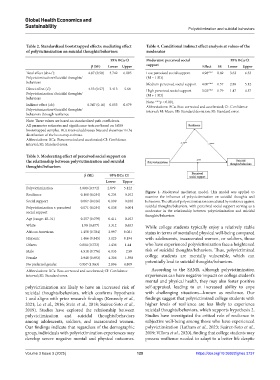
                                                               Figure  1. Moderated mediation model. This model was applied to
            Resilience            −0.168 (0.034)  −0.234  −0.102
                                                               examine the influence of polyvictimization on suicidal thoughts and
            Social support        −0.067 (0.016)  −0.099  −0.036  behaviors. The effect of polyvictimization is mediated by resilience against
            Polyvictimization × perceived   −0.071 (0.034)  −0.138  −0.004  suicidal thoughts/behaviors, with perceived social support serving as a
            social support                                     moderator in the relationship between polyvictimization and suicidal
                                                               thoughts/behaviors
            Age (range: 18–31)    −0.257 (0.079)  −0.411  −0.103
            White                  −1.98 (0.677)  −3.312  −0.653  While college students typically enjoy a relatively stable
            African American      −1.458 (0.784)  −2.997  0.081  status in terms of mental and physical well-being compared
            Hispanic              −1.466 (0.845)  −3.125  0.194  with adolescents, incarcerated women, or soldiers, those
            Others                 0.004 (0.733)  −1.436  1.44  who have experienced polyvictimization face a heightened
            Male                  −4.510 (0.776)  −6.033  −2.99  risk of suicidal thoughts/behaviors. Thus, polyvictimized
            Female                −2.948 (0.692)  −4.306  −1.590  college students are mentally vulnerable, which can
            No preferred gender    0.957 (1.963)  −2.896  4.809  potentially lead to suicidal thoughts/behaviors.
            Abbreviations: BCa: Bias-corrected and accelerated; CI: Confidence   According  to  the  SAMS,  although  polyvictimization
            interval; SE: Standard error.                      experiences can have negative impacts on college student’s
                                                               mental and physical health, they may also foster positive
            polyvictimization are likely to have an increased risk of   self-appraisal, leading to an increased ability to cope
            suicidal thoughts/behaviors, which confirms hypothesis   with challenging situations—known as resilience. Our
            1 and aligns with prior research findings (Kennedy et al.,   findings suggest that polyvictimized college students with
            2021; Le et al., 2016; Stein et al., 2018; Suárez-Soto et al.,   higher levels of resilience are less likely to experience
            2019). Studies have explored the relationship between   suicidal thoughts/behaviors, which supports hypothesis 2.
            polyvictimization  and  suicidal  thoughts/behaviors  Studies have investigated the critical role of resilience in
            among  adolescents,  soldiers,  and  incarcerated  women.   subjective well-being among those who have experienced
            Our findings indicate that regardless of the demographic   polyvictimization (Latham et al., 2023; Suárez-Soto et al.,
            group, individuals with polyvictimization experiences may   2019; Víllora et al., 2020), finding that college students may
            develop severe negative mental and physical outcomes.   possess resilience needed to adapt to a better life despite


            Volume 3 Issue 3 (2025)                        129                       https://doi.org/10.36922/ghes.3737

