


Page 173 - GHES-3-3
P. 173
Global Health Economics and
            Sustainability
                                                                                   Path model of child marriage in Africa


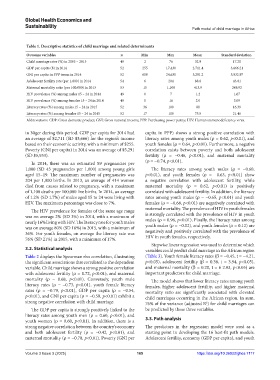
            Table 1. Descriptive statistics of child marriage and related determinants
            Outcome variables                       n        Min        Max        Mean        Standard deviation
            Child marriage rates (%) in 2005 – 2013  49       2          76         32.9            17.20
            GDP per capita ($) in 2014              52        255       17,430     2,711.4         3,666.21
            GNI per capita in PPP terms in 2014     52        600       24,630     5,291.2         5,932.97
            Adolescent fertility rate (per 1,000) in 2014   54  6        204        88.8            43.01
            Maternal mortality ratio (per 100,000) in 2013  53  15      1,100       413.9           249.92
            HIV prevalence (%) among males 15 – 24 in 2014  49  0        7          1.2             1.67
            HIV prevalence (%) among females 15 – 24 in 2014  49  0      16         2.0             3.09
            Literacy rates (%) among males 15 – 24 in 2015  52  36       100        80              16.39
            Literacy rates (%) among females 15 – 24 in 2015  52  17     100        75.5            21.46
            Abbreviations: GDP: Gross domestic product; GNI: Gross national income; PPP: Purchasing power parity; HIV: Human immunodeficiency virus.

            in Niger during this period. GDP per capita for 2014 had   capita in PPP) shows a strong positive correlation with
            an average of $2,711 (SD $3,666) for the region’s income   literacy rates among youth males (ρ = 0.62, p<0.01), and
            based on their economic activity, with a minimum of $255.   youth females (ρ = 0.64, p<0.01). Furthermore, a negative
            Poverty (GNI per capita) in 2014 was an average of $5,291   correlation exists between poverty and both adolescent
            (SD $5,933).                                       fertility (ρ = −0.46,  p<0.01), and maternal mortality

              In 2014, there was an estimated 89 pregnancies per   (ρ = −0.74, p<0.01).
            1,000 (SD 43 pregnancies per 1,000) among young girls   The literacy rates among youth males (ρ = −0.60,
            aged 15–19. The maximum number of pregnancies  was   p<0.01), and youth females (ρ = −0.63,  p<0.01) show
            204 per 1,000 births. In 2013, an average of 414 women   a negative correlation with adolescent fertility, while
            died from causes related to pregnancy, with a maximum   maternal mortality (ρ = 0.62,  p<0.01) is positively
            of 1,100 deaths per 100,000 live births. In 2014, an average   correlated with adolescent fertility. In addition, the literacy
            of 1.2% (SD 1.7%) of males aged 15 to 24 were living with   rates among youth males (ρ = −0.65, p<0.01) and youth
            HIV. The maximum percentage was close to 7%.       females (ρ = −0.68, p<0.01) are negatively correlated with
              The HIV prevalence for females of the same age range   maternal mortality. The prevalence of HIV in youth females
            was on average 2% (SD 3%) in 2014, with a maximum of   is strongly correlated with the prevalence of HIV in youth
            nearly 16% living with HIV. The literacy rate for youth males   males (ρ = 0.96, p<0.01). Finally, the literacy rates among
            was on average 80% (SD 16%) in 2015, with a minimum of   youth males (ρ = −0.02), and youth females (ρ = 0.12) are
            36%. For youth females, on average the literacy rate was   negatively and positively correlated with the prevalence of
            76% (SD 21%) in 2015, with a minimum of 17%.       HIV in youth females, respectively.
                                                                 Stepwise linear regression was used to determine which
            3.2. Statistical analysis                          variables could predict child marriage in the African region
            Table 2 displays the Spearman rho correlation, illustrating   (Table 3). Youth female literacy rates (β = −0.45, t = −4.21,
            the significant associations that correlated to the dependent   p<0.05), adolescent fertility (β = 0.38, t = 3.94, p<0.05),
            variable. Child marriage shows a strong positive correlation   and maternal mortality (β = 0.20, t = 6 2.03, p<0.05) are
            with adolescent fertility (ρ = 0.72, p<0.01), and maternal   important predictors for child marriage.
            mortality (ρ = 0.68,  p<0.01). Conversely, youth male   The model shows that lower literacy rates among youth
            literacy rates (ρ = −0.73,  p<0.01), youth female literacy   females,  higher  adolescent fertility, and higher maternal
            rates (ρ = −0.79,  p<0.01), GDP per capita (ρ = −0.54,   mortality ratio are significantly associated with elevated
            p<0.01), and GNI per capita (ρ = −0.59, p<0.01) exhibit a   child marriages occurring in the African region. In sum,
            strong negative correlation with child marriage.   76% of the variance (adjusted R ) for child marriages can
                                                                                         2
              The GDP per capita is strongly positively linked to the   be predicted by these three variables.
            literacy rates among youth men (ρ = 0.60,  p<0.01), and
            youth women (ρ = 0.60, p<0.01). In addition, there is a   3.3. Path analysis
            strong negative correlation between the country’s economy   The predictors in the regression model were used as a
            and both adolescent fertility (ρ = −0.42,  p<0.01), and   starting point in developing the 16 best-fit path models.
            maternal mortality (ρ = −0.70, p<0.01). Poverty (GNI per   Adolescent fertility, economy (GDP per capita), and youth


            Volume 3 Issue 3 (2025)                        165                       https://doi.org/10.36922/ghes.7117

