


Page 68 - GPD-1-1
P. 68
Gene & Protein in Disease                                   A novel USH2A gene mutation in retinitis pigmentosa


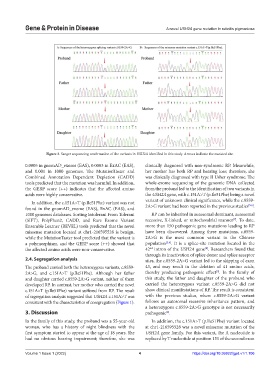
                     Figure 3. Sanger sequencing confirmation of the variants in USH2A identified in this study. Arrows indicate the mutated site.

            0.0005 in gnomAD_exome (EAS), 0.0003 in ExAC (EAS),   clinically diagnosed with non-syndromic RP. Meanwhile,
            and 0.001 in 1000 genomes. The MutationTaster  and   her mother has both RP and hearing loss; therefore, she
            Combined Annotation Dependent Depletion (CADD)     was clinically diagnosed with type II Usher syndrome. The
            tools predicted that the mutation was harmful. In addition,   whole-exome  sequencing of  the genomic  DNA collected
            the GERP score (++) indicates that the affected amino   from the proband led to the identification of two variants in
            acids were highly conservative.                    the USH2A gene, with c.151A>T (p.Ile51Phe) being a novel
              In addition, the c.151A>T (p.Ile51Phe) variant was not   variant of unknown clinical significance, while the c.8559-
                                                                                                           [5,6]
            found  in  the  gnomAD_exome  (EAS),  ExAC  (EAS),  and   2A>G variant had been reported in the previous studies  .
            1000 genomes databases. Sorting Intolerant From Tolerant   RP can be inherited in autosomal dominant, autosomal
            (SIFT), PolyPhen2, CADD, and Rare Exome Variant    recessive, X-linked, or mitochondrial manner . To date,
                                                                                                    [7]
            Ensemble Learner (REVEL) tools predicted that the novel   more than 150 pathogenic gene mutations leading to RP
            missense mutation located at chr1-216595528 is benign,   have been discovered. Among these mutations, c.8559-
            while the MutationTaster tool predicted that the variant is   2A>G is the most common variant in the Chinese
            a polymorphism, and the GERP score (++) showed that   population [5,6] .  It  is  a  splice-site  mutation  located  in  the
                                                                                        [8]
                                                                 nd
            the affected amino acids were non-conservative.    42  intron of the USH2A gene . Researchers found that
                                                               through its inactivation of splice donor and splice acceptor
            2.4. Segregation analysis                          sites, the c.8559-2A>G variant led to the skipping of exon
            The proband carried both the heterozygous variants, c.8559-  43, and may result in the deletion of 41 amino acids,
                                                                                             [9]
            2A>G, and c.151A>T (p.Ile51Phe). Although her father   thereby producing pathogenic effect . In the family of
            and daughter carried c.8559-2A>G variant, neither of them   this study, the father and daughter of the proband who
            developed RP. In contrast, her mother who carried the novel   carried the heterozygous variant c.8559-2A>G did not
            c.151A>T (p.Ile51Phe) variant suffered from RP. The result   show clinical manifestations of RP. The result is consistent
            of segregation analysis suggested that USH2A c.151A>T was   with the previous studies, where c.8559-2A>G variant
            consistent with the characteristics of cosegregation (Figure 1).  follows  an autosomal recessive inheritance  pattern,  and
                                                               a heterozygous c.8559-2A>G genotype is not necessarily
            3. Discussion                                      pathogenic .
                                                                        [8]
            In the family of this study, the proband was a 55-year-old   In addition, the c.151A>T (p.Ile51Phe) variant located
            woman, who has a history of  night blindness with the   at chr1-216595528 was a novel missense mutation of the
            first symptom started to appear at the age of 18 years. She   USH2A gene family. For this variant, the A nucleotide is
            had no obvious hearing impairment; therefore, she was   replaced by T nucleotide at position 151 of the second exon


            Volume 1 Issue 1 (2022)                         4                      https://doi.org/10.36922/gpd.v1i1.106

