


Page 62 - GTM-1-1
P. 62
Global Translational Medicine Fusion events identified in tumor
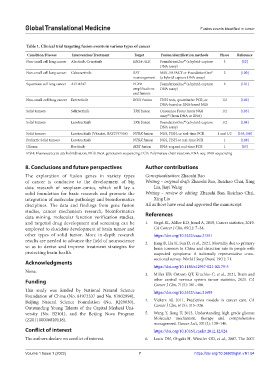
Table 1. Clinical trial targeting fusion events in various types of cancer
Condition/Disease Intervention/Treatment Target Fusion identification methods Phase Reference
Non-small cell lung cancer Alectinib, Crizotinib EML4-ALK FoundationOne (a hybrid-capture 3 [52]
DNA assay)
Non-small cell lung cancer Cabozantinib RET MSK-IMPACT or FoundationOne® 2 [100]
rearrangement (a hybrid-capture DNA assay)
Squamous cell lung cancer AZD4547 FGFR FoundationOne (a hybrid-capture 2 [101]
amplifications DNA assay)
and fusions
Non-small-cell lung cancer Entrectinib ROS1 fusion FISH tests, quantitative PCR, or 1/2 [102]
DNA-based or RNA-based NGS
Solid tumors Selitrectinib TRK fusion Oncomine Focus Assay NGS 1/2 [103]
assay (from DNA or RNA)
Solid tumors Larotrectinib TRK fusion FoundationOne (a hybrid-capture 1/2 [104]
DNA assay)
Solid tumors Larotrectinib (Vitrakvi, BAY2757556) NTRK fusion NGS, FISH, or real-time PCR 1 and 1/2 [105,106]
Pediatric Solid tumors Larotrectinib NTRK fusion NGS, FISH or real-time PCR 1 [108]
Glioma Boritinib MET fusion RNA-seq and real-time PCR 1 [83]
FISH: Fluorescence in situ hybridization, NGS: Next-generation sequencing, PCR: Polymerase chain reaction, RNA-seq: RNA sequencing
8. Conclusions and future perspectives Author contributions
The exploration of fusion genes in variety types Conceptualization: Zhaoshi Bao
of cancer is conducive to the development of big Writing – original draft: Zhaoshi Bao, Ruichao Chai, Xing
data research of neoplasm-omics, which will lay a Liu, Jiayi Wang
solid foundation for basic research and promote the Writing – review & editing: Zhaoshi Bao, Ruichao Chai,
integration of molecular pathology and bioinformatics Xing Liu
disciplines. The data and findings from gene fusion All authors have read and approved the manuscript.
studies, cancer mechanism research, bioinformatics
data mining, molecular function verification studies, References
and targeted drug development and screening can be 1. Siegel RL, Miller KD, Jemal A, 2019, Cancer statistics, 2019.
employed to elucidate development of brain tumor and CA Cancer J Clin, 69(1): 7–34.
other types of solid tumor. More in-depth research https://doi.org/10.3322/caac.21551
results are needed to advance the field of neuroscience 2. Jiang B, Liu H, Sun D, et al., 2021, Mortality due to primary
so as to devise and improve treatment strategies for brain tumours in China and detection rate in people with
protecting brain health. suspected symptoms: A nationally representative cross-
sectional survey. World J Surg Oncol, 19(1): 71.
Acknowledgments
https://doi.org/10.1186/s12957-021-02179-5
None.
3. Miller KD, Ostrom QT, Kruchko C, et al., 2021, Brain and
Funding other central nervous system tumor statistics, 2021. CA
Cancer J Clin, 71(5): 381–406.
This study was funded by National Natural Science https://doi.org/10.3322/caac.21693
Foundation of China (No. 81972337 and No. 81802994),
Beijing Natural Science Foundation (No. JQ20030), 4. Vickers AJ, 2011, Prediction models in cancer care. CA
Outstanding Young Talents of the Capital Medical Uni- Cancer J Clin, 61(5): 315–326.
versity (No. B2101), and the Beijing Nova Program 5. Wang Y, Jiang T, 2013, Understanding high grade glioma:
(Z201100006820118). Molecular mechanism, therapy and comprehensive
management. Cancer Lett, 331(2): 139–146.
Conflict of interest https://doi.org/10.1016/j.canlet.2012.12.024
The authors declare no conflict of interest. 6. Louis DN, Ohgaki H, Wiestler OD, et al., 2007, The 2007
Volume 1 Issue 1 (2022) 7 https://doi.org/10.36922/gtm.v1i1.54

