


Page 27 - GTM-3-3
P. 27
Global Translational Medicine                                  Computational advances in cancer liquid biopsy


            R package called SIGNALS  allowed users to go beyond   and patterns of fragmentation in cfDNA can provide
                                  55
            total CNV information to identify cell heterogeneity   additional information beyond the genetic analysis of
            phasing copy number events to individual homologs in   somatic mutations and CNV abnormalities, offering hope
            single-cell genomes, quantifying haplotype-specific CNV   for patients affected by cancers with limited genetic lesions,
            distributions, and thereby validating copy number events   such as Ewing sarcoma.  The fragmentation patterns of
                                                                                   64
            using variant allele fractions (Table 1).          DNA released by tumor cells do not appear to be random,
              Alongside genomics, it is now possible to produce   nor entirely determined by the DNA primary sequence.
            proteomic, 56-58  transcriptomic, 56,59,60  and epigenomic data 61-63    Instead, chromatin structure and the epigenetic states of
            from a single CTC, providing a more complete picture of   the cells from which the DNA fragments originated play
            the molecular mechanisms underlying the disease.   a significant role in shaping them. 21,65,66  As a result, ctDNA
                                                               typically has shorter and more heterogeneous fragment
            3. Epigenomics                                     lengths  compared to  normal  cfDNA.  Normal cfDNA
            Extensive DNA methylation perturbations have been   fragments  are  usually  around  160  –  200  base  pairs  (bp)
            widely explored in human cancer, but very few studies   in length, reflecting the size of nucleosomal units from
            have focused on analyzing this phenomenon in CTCs, 61-63    apoptotic cells. In contrast, ctDNA fragments are often
            probably  due  to  the  technical  difficulties  of  isolating   shorter, with a significant proportion of fragments being
            and performing epigenetic analysis on such rare cells.   <150 bp.
            Nevertheless, significant results have been obtained in the   As several authors have pointed out, integrating
            field, shedding light on the molecular mechanism of cancer   multiple sequencing modalities – including epigenomics,
            cell stemness and dissemination. For instance, Gkountela   fragmentomics, and genomics – would provide the
            et al.  performed a genome-wide analysis of CTC’s DNA-  best performance for early cancer detection, improving
                62
            methylome, demonstrating how CTC clusters differ from   sensitivity, specificity, and  robustness  of  prediction.
                                                                                                            67
            single CTCs in their methylation profiles. They associated   Future efforts should consider the high variability in
            CTC clustering with defined changes in DNA methylation   fragmentation between different individuals depending
            that enhance stemness and promote metastasis.      on genetics, comorbidities, and lifestyle factors, to build

              Significant technical progress has been made with   methodologies that consider intersample variability and
            cfDNA. Recent research suggests that chromatin signatures   define patient-specific thresholds.

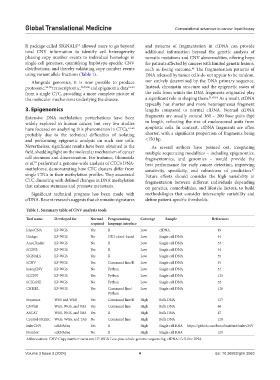
            Table 1. Summary table of CNV analysis tools
            Tool name   Developed for   Normal   Programming   Coverage  Sample            References
                                        required  language interface
            IchorCNA    LP-WGS          Yes    R             Low     cfDNA                                           19
            Ginkgo      LP-WGS          No     GUI-cloud-based  Low  Single cell DNA                                      44
            AneuFinder  LP-WGS          No     R             Low     Single cell DNA                                      53
            SCOPE       LP-WGS          Yes    R             Low     Single cell DNA                                      54
            SIGNALS     LP-WGS          Yes    R             Low     Single cell DNA                                      55
            SCNV        LP-WGS          Yes    Command line/R  Low   Single cell DNA                                      45
            baseqCNV    LP-WGS          No     Python        Low     Single cell DNA                                      51
            SCCNV       LP-WGS          Yes    Python        Low     Single cell DNA          125
            SCICoNE     LP-WGS          No     Python        Low     Single cell DNA                                      52
            CHISEL      LP-WGS          Yes    Command line/  Low    Single cell DNA          126
                                               Python
            Sequenza    WES and WGS     Yes    Command line/R  High  Bulk DNA                 127
            CNVkit      WES, WGS, and TAS  Yes  Command line  High   Bulk DNA                                        46
            ASCAT       WES, WGS, and TAS  Yes  R            High    Bulk DNA                                        47
            Control-FREEC  WGS, WGS, and TAS  No  Command line  High  Bulk DNA                128
            InferCNV    scRNASeq        Yes    R             High    Single cell RNA  https://github.com/broadinstitute/inferCNV
            Numbat      scRNASeq        No     R             High    Single cell RNA          129
            Abbreviations: CNV: Copy number variation; LP-WGS: Low-pass whole-genome sequencing; cfDNA: Cell-free DNA.


            Volume 3 Issue 3 (2024)                         4                               doi: 10.36922/gtm.3063

