


Page 32 - GTM-3-3
P. 32
Global Translational Medicine                                  Computational advances in cancer liquid biopsy


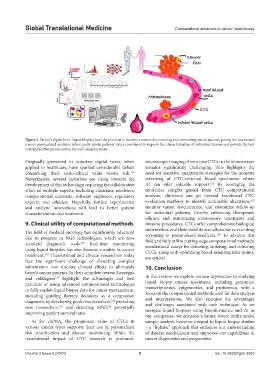
            Figure 2. Patient’s digital twin. Liquid biopsies have the potential to become a routine for screening and monitoring cancer patients, paving the way toward
            a more personalized medicine where multi-modal patients’ data is combined to improve the characterization of individual tumors and provide the best
            customized therapeutic option for each unique patient.

            Originally pioneered in  industry,  digital  twins,  when   microscopic imaging of very rare CTCs in the bloodstream
            applied to healthcare, have sparked considerable debate   remains significantly challenging. This highlights the
            concerning their  socio-ethical  value versus  risk.    need for sensitive, quantitative strategies for the accurate
                                                         116
            Nevertheless, several initiatives are rising towards the   screening of CTC-enriched blood specimens, where
                                                                                          122
            development of this technology, requiring the collaborative   AI can offer valuable support.  By leveraging the
            effort of multiple experts, including clinicians, modelers,   molecular insights gained from CTC computational
            computational scientists, software engineers, regulatory   analysis, clinicians can go beyond traditional CTC
                                                                                                            123
            experts, and ethicists. Hopefully, further experimental   evaluation methods to identify actionable alterations,
            and analytic innovations will lead to better patient   monitor tumor reoccurrence, and customize follow-up
            characterization and treatment.                    for  individual  patients,  thereby  enhancing  therapeutic
                                                               efficacy and minimizing unnecessary treatments and
            9. Clinical utility of computational methods       invasive procedures. CTCs offer comprehensive biological
                                                               information, and their viability also allows for ex vivo drug
            The field of medical oncology has significantly advanced   screening in personalized medicine.  To advance this
                                                                                             124
            due  to  progress  in  NGS  technologies,  which  are  now   field and fully utilize cutting-edge computational methods,
            standard diagnostic tools.  Real-time monitoring   standardized assays for detecting, isolating, and culturing
                                   117
            using liquid biopsies has also become a reality in cancer   CTCs, along with optimizing blood sampling time points,
            treatment.  Translational and clinical researchers today   are crucial.
                    118
            face the significant challenge of dissecting complex
            information into  discrete  clinical  effects to  ultimately   10. Conclusion
            benefit cancer patients. In their complete review, Siravegna
            and  colleagues   highlight  the  advantages  and  best   In this review, we explore various approaches to studying
                        119
            practices of using advanced computational technologies   liquid biopsy cancer specimens, including genomics,
            to fully exploit liquid biopsy data for cancer management,   transcriptomics, epigenomics, and proteomics, with a
                                                               focus on the computational methods used for data analysis
            including guiding therapy decisions as a companion
            diagnostic by developing predictive classifiers,  providing   and interpretation. We also examine the advantages
                                                120
            new biomarkers,  and detecting MRD,  potentially   and challenges associated with each technique. As we
                          121
                                               20
            improving patient survival rates.                  navigate  liquid biopsies using bioinformatics and AI as
                                                               our compasses, we envision a future where multi-modal
              As for ctDNA, the prognostic value of CTCs in    sample analysis becomes integral to liquid biopsy studies
            various cancer types supports their use in personalized   – a “holistic” approach that enhances our understanding
            risk stratification and disease monitoring. While the   of  disease  mechanisms  and  improves  our  capabilities  in
            translational impact of CTC research is profound,   cancer diagnostics and prognostics.


            Volume 3 Issue 3 (2024)                         9                               doi: 10.36922/gtm.3063

