


Page 29 - GTM-3-3
P. 29
Global Translational Medicine                                  Computational advances in cancer liquid biopsy


              Nevertheless, collecting CTCs from a patient’s blood
            is not a straightforward task and is strongly influenced by
            the cancer type, sampling site, timing, and many clinical
            factors such as tumor grade, invasiveness, and size.
            Moreover, technical issues that can affect the outcome of
            the analysis include marker-dependent or independent
            selection and RNA quantity and quality.
              Many single-cell RNA-seq analyses of CTCs utilize
            antibody staining of epithelial markers for CTC detection,
            resulting in a partial/biased sampling of the circulating
            cells and upregulated epithelial gene expression in CTCs
            compared to controls. Conversely, many CTCs present a
            hybrid epithelial/mesenchymal phenotype  or are in EMT,
                                             81
            as demonstrated by a recent paper on metastatic gastric
            cancer,  where the authors combined size-dependent
                 82
            recovery of CTCs with CD45-negative selection, allowing
            the inclusion of EMT-induced CTCs. On the other hand,
            epithelial non-tumor cells are shed in blood during
            inflammation, infections, and invasive procedures such
            as surgery and biopsies, which may be confounded for
            CTCs in cancer patients, patients with benign tumors, and
            healthy individuals. These issues must be considered as the
            detection of cancer in asymptomatic patients, which is the
            primary goal of detection tests, requires high specificity.
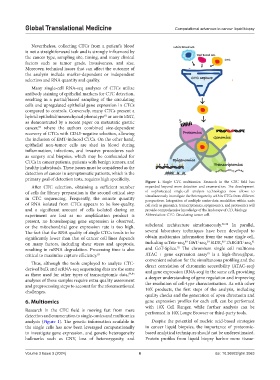
                                                               Figure  1.  Single CTC multiomics. Research in the CTC field has
              After CTC selection, obtaining a sufficient number   expanded beyond mere detection and enumeration. The development
            of cells for library preparation is the second critical step   of sophisticated single-cell analysis technologies now allows to
            in  CTC sequencing.  Frequently,  the minute quantity   simultaneously investigate the heterogeneity within CTCs from different
                                                               perspectives. Integration of multiple omics-data modalities within each
            of RNA isolated from CTCs appears to be low-quality,   cell such as genomics, transcriptomics, epigenomics, and proteomics will
            and a significant amount of cells isolated during an   provide comprehensive knowledge of the landscape of CTC biology.
            experiment are lost as no amplification product is   Abbreviation: CTC: Circulating tumor cell.
            present, no housekeeping gene expression is observed,
            or the mitochondrial gene expression rate is too high.   subclonal architecture simultaneously. 86-88  In parallel,
            The fact that the RNA quality of single CTCs tends to be   several laboratory techniques have been developed to
            significantly lower than that of cancer cell lines depends   obtain multiomics information from the same single cell,
                                                                                               90
                                                                                                            91
                                                                                89
                                                                                         59
            on many factors, including shear stress and apoptosis,   including scTrio-seq,  G&T-seq,  SIDR,  TARGET-seq,
                                                                            92
            resulting  in  mRNA  degradation.  Processing  time  is  also   and GoT-Splice.  The chromium single cell multiome
                                                                                         93
            critical to maximize capture efficiency. 83        ATAC  +  gene  expression  assay   is  a  high-throughput,
                                                               convenient solution for the simultaneous profiling and the
              Thus,  although  the  tools  employed  to  analyze  CTC-  direct correlation of chromatin accessibility (ATAC-seq)
            derived bulk and scRNA-seq sequencing data are the same   and gene expression (RNA-seq) in the same cell, providing
            as those used for other types of transcriptomic data, 84,85    a deeper understanding of gene regulation and improving
            analyses of these samples require extra quality assessment
            and preprocessing steps to account for the aforementioned   the resolution of cell-type characterization. As with other
            challenges.                                        10X products, the first steps of the analysis, including
                                                               quality checks and the generation of open chromatin and
            6. Multiomics                                      gene expression profiles for each cell, can be performed
                                                               with 10X Cell Ranger, while further analysis can be
            Research in the CTC field is moving fast from mere   performed in 10X Loupe Browser or third-party tools.
            detection and enumeration to single-omics and multiomics
            analysis (Figure  1). The genetic information available in   Despite the potential of nucleic acid-based strategies
            the single cells has now been leveraged computationally   in cancer liquid biopsies, the importance of proteomic-
            to investigate gene expression, and genetic heterogeneity   based analytical techniques should not be underestimated.
            hallmarks such as CNV, loss of heterozygosity, and   Protein profiles from liquid biopsy harbor more tissue-


            Volume 3 Issue 3 (2024)                         6                               doi: 10.36922/gtm.3063

