


Page 139 - GTM-4-1
P. 139
Global Translational Medicine                                      MRgFUS sonication parameters prediction


                                                               was not an issue. For the entire cohort, the MAE was 2.29,
                                                               the RMSE was 3.13, and the error rate was 6.2%.
                                                                 In addition, we chose to use a deep neural network
                                                               for its ability to perform optimal computations based on
                                                               the input data, regardless of regression complexity. Using
                                                               a CNN with hidden layers, the model showed promising
                                                               results with an MAE of 1.93, an RMSE of 2.69, and an error
                                                               rate of 5.37%. Thus, the consistency of the neural network
                                                               was  validated  using  the  training  dataset.  Overall,  with
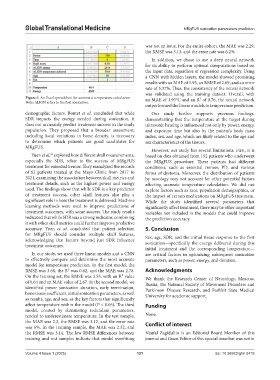
            Figure 5. An Excel spreadsheet for automatic temperature calculation  an MAE of 1.93°C and an R² of 0.76, the neural network
            Note: ALIGN refers to the first sonication.
                                                               outperformed the linear models in temperature prediction.
            demographic factors. Boutet  et al. concluded that while   Our  study  further  supports  previous  findings,
            SDR impacts the energy needed during sonication, it   demonstrating that the temperature at the target during
            does not accurately predict treatment success in the study   ultrasonic heating is influenced not only by power, energy,
            population. They proposed that a broader assessment,   and exposure time but also by the patient’s body mass
            including local variations in bone density, is necessary   index, sex, and age, which are likely related to the age and
            to determine which patients are good candidates for   sex characteristics of the tissues.
            MRgFUS.
                                                                 However, our study has several limitations. First, it is
              Yuen et al.  explored how different skull measurements,   based on data obtained from 152 patients who underwent
                      43
            especially the SDR, relate to the success of MRgFUS   the MRgFUS procedure. These patients had different
            treatment for essential tremor. They reanalyzed the records   conditions, such as essential tremor, PD, and various
            of 62  patients treated at the Mayo Clinic from 2017 to   forms of dystonia. Moreover, the distribution of patients
            2021, examining the association between skull metrics and   by nosology may not account for other potential factors
            treatment details, such as the highest power and energy   affecting accurate temperature calculation. We did not
            used. The findings show that while SDR is a key predictor   explore factors such as race, population demographics, or
            of treatment success, other skull features also play a   the impact of certain medications on MRgFUS treatment.
            significant role in how the treatment is delivered. Machine   While  the study  identified several parameters that
            learning methods were used to improve predictions of   significantly affect treatment, there may be other important
            treatment outcomes, with some success. The study results   variables not included in the models that could improve
            indicated that while SDR was a strong indicator, combining   the prediction accuracy.
            it with other skull metrics could further improve predictive
            accuracy. Yuen  et  al. concluded that patient selection   5. Conclusion
            for MRgFUS should consider multiple skull features,
            acknowledging that factors beyond just SDR influence   Sex, age, SDR, and the initial tissue response to the first
            treatment outcomes.                                sonication—specifically the energy delivered during this
                                                               initial treatment and the corresponding temperature—
              In our study, we used three linear models and a CNN   are critical factors in optimizing subsequent sonication
            to effectively compare and determine the most accurate   parameters, such as power, energy, and duration.
            model for temperature prediction. In the first model, the
            RMSE was 3.68, the R² was 0.62, and the MAE was 2.78.   Acknowledgments
            On the training set, the RMSE was 3.55, with an R² value   We thank the Research Center of Neurology, Moscow,
            of 0.64 and an MAE value of 2.67. In the second model, we   Russia, the National Society of Movement Disorders and
            identified power sonication duration, early termination,   Parkinson Disease Research, and Bashkir State Medical
            bone tissue coefficient, initial sonication parameters, as well   University for academic support.
            as results, age, and sex, as the key factors that significantly
            affect temperature within the model (P < 0.05). The third   Funding
            model, created by eliminating redundant parameters,
            tended to underestimate temperature. In the test sample,   None.
            the MAE was 2.2, the RMSE was 3.12, and the error rate   Conflict of interest
            was 6%. In the training sample, the MAE was 2.32, and
            the RMSE was 3.14. The low RMSE differences between   Naufal Zagidullin is an Editorial Board Member of this
            training and test samples indicate that model overfitting   journal and Guest Editor of this special issue but was not in


            Volume 4 Issue 1 (2025)                        131                              doi: 10.36922/gtm.5419

