


Page 35 - IJAMD-1-2
P. 35
International Journal of AI for
            Materials and Design
                                                                                      AI-driven quality assurance in AM


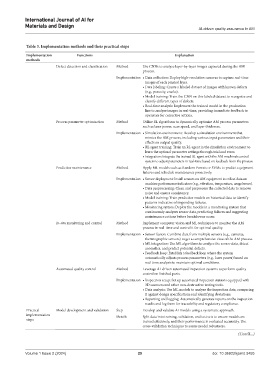
            Table 3. Implementation methods and their practical steps
            Implementation        Functions                                Explanation
            methods
                         Defect detection and classification  Method  Use CNNs to analyze layer-by-layer images captured during the AM
                                                              process.
                                                   Implementation •  Data collection: Deploy high‑resolution cameras to capture real‑time
                                                               images of each printed layer.
                                                              •  Data labeling: Create a labeled dataset of images with known defects
                                                               (e.g., porosity, cracks).
                                                              •  Model training: Train the CNN on this labeled dataset to recognize and
                                                               classify different types of defects.
                                                              •  Real‑time analysis: Implement the trained model in the production
                                                               line to analyze images in real-time, providing immediate feedback to
                                                               operators for corrective actions.
                         Process parameter optimization  Method  Utilize RL algorithms to dynamically optimize AM process parameters
                                                              such as laser power, scan speed, and layer thickness.
                                                   Implementation •  Simulation environment: Develop a simulation environment that
                                                               mimics the AM process, including various input parameters and their
                                                               effects on output quality.
                                                              •  RL agent training: Train an RL agent in the simulation environment to
                                                               learn the optimal parameter settings through trial and error.
                                                              •  Integration: Integrate the trained RL agent with the AM machine’s control
                                                               system to adjust parameters in real-time based on feedback from the process.
                         Predictive maintenance    Method     Apply ML models such as Random Forests or SVMs to predict equipment
                                                              failures and schedule maintenance proactively.
                                                   Implementation •  Sensor deployment: Install sensors on AM equipment to collect data on
                                                               machine performance indicators (e.g., vibration, temperature, usage hours).
                                                              •  Data preprocessing: Clean and preprocess the collected data to remove
                                                               noise and ensure consistency.
                                                              •  Model training: Train predictive models on historical data to identify
                                                               patterns indicative of impending failures.
                                                              •  Monitoring system: Deploy the models in a monitoring system that
                                                               continuously analyzes sensor data, predicting failures and suggesting
                                                               maintenance actions before breakdowns occur.
                         In-situ monitoring and control  Method  Implement computer vision and ML techniques to monitor the AM
                                                              process in real-time and control it for optimal quality.
                                                   Implementation •  Sensor fusion: Combine data from multiple sensors (e.g., cameras,
                                                               thermographic sensors) to get a comprehensive view of the AM process.
                                                              •  ML integration: Use ML algorithms to analyze the sensor data, detect
                                                               anomalies, and predict potential defects.
                                                              •  Feedback loop: Establish a feedback loop where the system
                                                               automatically adjusts process parameters (e.g., laser power) based on
                                                               real-time analysis to maintain optimal conditions.
                         Automated quality control  Method    Leverage AI-driven automated inspection systems to perform quality
                                                              control on finished parts.
                                                   Implementation •  Inspection setup: Set up automated inspection stations equipped with
                                                               3D scanners and other non-destructive testing tools.
                                                              •  Data analysis: Use ML models to analyze the inspection data, comparing
                                                               it against design specifications and identifying deviations.
                                                              •  Reporting and logging: Automatically generate reports on the inspection
                                                               results and log them for traceability and regulatory compliance.
            Practical    Model development and validation  Step  Develop and validate AI models using a systematic approach.
            implementation                         Details    Split data into training, validation, and test sets to ensure models are
            steps                                             trained effectively, and their performance is evaluated accurately. Use
                                                              cross-validation techniques to assess model robustness.
                                                                                                      (Cont’d...)


            Volume 1 Issue 2 (2024)                         29                             doi: 10.36922/ijamd.3455

