


Page 582 - IJB-10-3
P. 582
International Journal of Bioprinting                                 4D printing & simulation for biomedicine


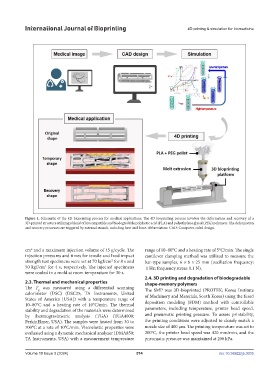
            Figure 1. Schematic of the 4D bioprinting process for medical applications. The 4D bioprinting process involves the deformation and recovery of a
            3D-printed structure utilizing a blend of biocompatible and biodegradable polylactic acid (PLA) and polyethylene glycol (PEG) polymers. The deformation
            and recovery processes are triggered by external stimuli, including heat and force. Abbreviation: CAD: Computer-aided design.


              2
            cm  and a maximum injection volume of 45 g/cycle. The   range of 10–80°C and a heating rate of 5°C/min. The single
            injection pressures and times for tensile and Izod impact   cantilever clamping method was utilized to measure the
                                                 2
            strength test specimens were set at 70 kgf/cm  for 8 s and   bar-type samples, 6 × 6 × 25 mm (oscillation frequency:
            50 kgf/cm  for 4 s, respectively. The injected specimens    1 Hz; frequency stress: 0.1 N).
                    2
            were cooled in a mold at room temperature for 30 s.
                                                               2.4. 3D printing and degradation of biodegradable
            2.3. Thermal and mechanical properties             shape-memory polymers
            The  T   was  measured  using  a  differential  scanning   The SMP was 3D-bioprinted (PROTEK; Korea Institute
                 g
            calorimeter (DSC) (DSC25; TA Instruments, United   of Machinery and Materials, South Korea) using the fused
            States of America [USA]) with a temperature range of
            10–80°C  and  a heating  rate  of 10°C/min.  The  thermal   deposition  modeling  (FDM)  method  with  controllable
            stability and degradation of the materials were determined   parameters, including temperature, printer head speed,
            by thermogravimetric  analysis (TGA)  (TGA4000;    and pneumatic printing pressure. To assess printability,
            PerkinElmer, USA). The samples were heated from 30 to   the printing conditions were adjusted to closely match a
            700°C at a rate of 10°C/min. Viscoelastic properties were   nozzle size of 400 µm. The printing temperature was set to
            evaluated using a dynamic mechanical analyzer (DMA850;   200°C, the printer head speed was 420 mm/min, and the
            TA Instruments, USA) with a measurement temperature   pneumatic pressure was maintained at 200 kPa.


            Volume 10 Issue 3 (2024)                       574                                doi: 10.36922/ijb.3035

