


Page 182 - IJB-10-5
P. 182
International Journal of Bioprinting                             Control nutrients to manipulate fungal growth


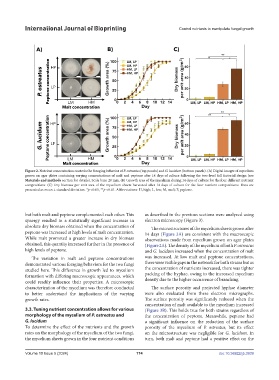
            Figure 2. Nutrient concentration controls the foraging behavior of P. ostreatus (top panels) and G. lucidum (bottom panels). (A) Digital images of mycelium
            grown on agar plates containing varying concentrations of malt and peptone after 14 days of culture following the two-level full factorial design (see
            Materials and methods section for details). Scale bars: 20 mm. (B) Growth area of the mycelium during 14 days of culture for the four different nutrient
            compositions. (C) Dry biomass per unit area of the mycelium sheets harvested after 14 days of culture for the four nutrient compositions. Data are
            presented as mean ± standard deviation. *p <0.05, **p <0.01. Abbreviations: H, high; L, low; M, malt; P, peptone.


            but both malt and peptone complemented each other. This   as described in the previous sections were analyzed using
            synergy resulted in a statistically significant increase in   electron microscopy (Figure 3).
            absolute dry biomass obtained when the concentration of   The microstructures of the mycelium sheets grown after
            peptone was increased at high levels of malt concentration.   14 days (Figure 3A) are consistent with the macroscopic
            While malt promoted a greater increase in dry biomass   observations made from mycelium grown on agar plates
            obtained, this quantity increased further in the presence of   (Figure 2A). The density of the mycelium of both P. ostreatus
            high levels of peptone.                            and G. lucidum increased when the concentration of malt
               The  variation  in  malt  and  peptone  concentrations   was increased. At low malt and peptone concentrations,
            demonstrated various foraging behaviors for the two fungi   there were visible gaps in the network for both strains but as
            studied  here.  This  difference  in  growth  led  to  mycelium   the concentration of nutrients increased, there was tighter
            formation with differing macroscopic appearances, which   packing of the hyphae, owing to the increased mycelium
            could readily influence their properties. A microscopic   density due to the higher occurrence of branching.
            characterization of the mycelium was therefore conducted   The surface porosity and projected hyphae diameter
            to  better  understand  the  implications  of  the  varying   were also evaluated from these electron micrographs.
            growth rates.                                      The surface porosity was significantly reduced when the
                                                               concentration of malt available to the mycelium increased
            3.3. Tuning nutrient concentration allows for various   (Figure 3B). This holds true for both strains regardless of
            morphology of the mycelium of P. ostreatus and     the  concentration of  peptone.  Meanwhile,  peptone  had
            G. lucidum                                         a significant influence on the reduction of the surface
            To determine the effect of the nutrients and the growth   porosity of the mycelium of  P. ostreatus, but its effect
            rates on the morphology of the mycelium of the two fungi,   on the microstructure was negligible for  G. lucidum. In
            the mycelium sheets grown in the four nutrient conditions   turn, both malt and peptone had a positive effect on the


            Volume 10 Issue 5 (2024)                       174                                doi: 10.36922/ijb.3939

