


Page 118 - IJB-7-1
P. 118
3D Printed PLA/HAp Biocomposites


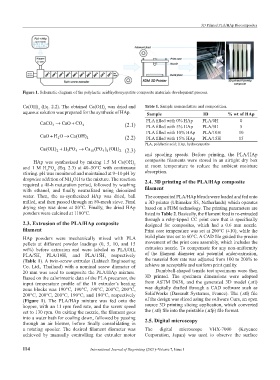
           Figure 1. Schematic diagram of the polylactic acid/hydroxyapatite composite materials development process.

           Ca(OH)  (Eq. 2.2). The obtained Ca(OH)  was dried and   Table 1. Sample nomenclature and composition.
                 2
                                              2
           aqueous solution was prepared for the synthesis of HAp.  Sample             ID         % wt of HAp
                                                               PLA filled with 0% HAp  PLA/0H          0
                  CaCO →   CaOCO+   2                 (2.1)    PLA filled with 5% HAp  PLA/5H          5
                       3
                                                               PLA filled with 10% HAp  PLA/10H        10
                  CaOH O+  2  →  CaOH(  ) 2           (2.2)    PLA filled with 15% HAp  PLA/15H        15
                                                               PLA, polylactic acid; HAp, hydroxyapatite
                  Ca OH(  ) + HPO →  Ca ( PO ) ( OH) 2  (2.3)
                                             4 6
                                       10
                              3
                                 4
                         2
                                                               and spooling speeds. Before printing, the PLA/HAp
               HAp  was  synthesized  by  mixing  1.5  M  Ca(OH)    composite filaments were stored in an airtight dry box
                                                          2
           and 1 M H PO   (Eq.  2.3)  at  40–50°C  with  continuous   at room temperature to reduce the ambient moisture
                     3
                        4
           stirring. pH was monitored and maintained at 9–10 pH by   absorption.
           dropwise addition of NH OH to the mixture. The reaction   2.4. 3D printing of the PLA/HAp composite
                               4
           required a 48-h maturation period, followed by washing
           with  ethanol,  and  finally  neutralized  using  deionized   filament
           water.  Then, the as-synthesized HAp  was dried, ball   The composited PLA/HAp blends were loaded and fed onto
           milled, and then passed through an 80-mesh sieve. Final   a 3D printer (Ultimaker S5, Netherlands) which operates
           drying  step  was  done  at  80°C.  Finally,  the  dried  HAp   based on a FDM technology. The printing parameters are
           powders were calcined at 1100°C.                    listed in Table 2. Basically, the filament feed is re-extruded
                                                               through  a  ruby-tipped  CC  print  core  that  is  specifically
           2.3. Extrusion of the PLA/HAp composite             designed for composites, which had a 0.6 mm nozzle.
           filament                                            Print core temperature was set at 200°C (±10), while the
           HAp powders were mechanically mixed with PLA        build plate was set to 60°C. A CAD file guided the precise
           pellets  at  different  powder  loadings  (0,  5,  10,  and  15   movement of the print core assembly, which includes the
           wt%)  before  extrusion  and  were  labeled  as  PLA/0H,   extrusion nozzle. To compensate for any non-uniformity
           PLA/5H,  PLA/10H,  and  PLA/15H,  respectively      of  the  filament  diameter  and  potential  under-extrusion,
           (Table 1). A twin-screw extruder (Labtech Engineering   the material flow rate was adjusted from 100 to 200% to
           Co.  Ltd., Thailand)  with  a  nominal  screw  diameter  of   achieve an acceptable and uniform print quality.
           20 mm was used to composite the PLA/HAp mixture.        Dumbbell-shaped tensile test specimens were then
           Based on the calorimetric data of the PLA precursor, the   3D printed.  The  specimen  dimensions  were adopted
           input  temperature  profile  of  the  10  extruder’s  heating   from ASTM D638, and the generated 3D model (.stl)
           zone blocks was 190°C, 190°C, 190°C, 200°C, 200°C,   was digitally  drafted  through  a CAD software  such as
           200°C, 200°C, 200°C, 190°C, and 180°C, respectively   SolidWorks (Dassault Systemes, France). The (.stl) file
           (Figure  1).  The PLA/HAp mixture was fed onto the   of the design was sliced using the software Cura, an open
           hopper, with an 11 rpm feed rate, and the screw speed   source 3D printing slicing application, which converted
           set to 130 rpm. On exiting the nozzle, the filament goes   the (.stl) file into the printable (.ufp) file format.
           into a water bath for cooling down, followed by passing   2.5. Digital microscopy
           through  an  air  blower,  before  finally  consolidating  in
           a  rotating  spooler.  The  desired  filament  diameter  was   The   digital   microscope   VHX-7000   (Keyence
           achieved by manually controlling the extruder motor   Corporation,  Japan) was used to observe the  surface


           114                         International Journal of Bioprinting (2021)–Volume 7, Issue 1

