


Page 300 - IJB-9-1
P. 300
International Journal of Bioprinting             3D printable conductive composite inks for biocompatible electrodes


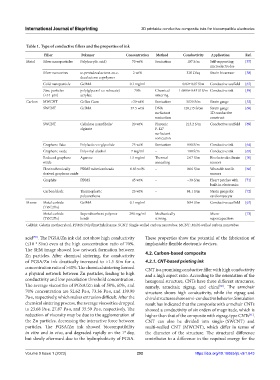
            Table 1. Type of conductive fillers and the properties of ink
                    Filler          Polymer            Concentration  Method   Conductivity  Application  Ref.
            Metal  Silver nanoparticles  Poly(acrylic acid)  70 wt%  Sonication  107 S/m  Self-supporting   [57]
                                                                                          microelectrodes
                   Silver nanowires  ω-pentadecalactone-co-ε-  2 wt%  –         320 Ω/sq  Strain biosensor  [58]
                                   decalactone copolymer
                   Gold nanoparticle  GelMA             0.1 mg/ml  –           0.82±0.07 S/m  Conductive scaffold  [67]
                   Zinc particles   poly(glycerol-co-sebacate)   70%  Chemical   1.6886±0.4310 S/m Conductive ink  [59]
                   (<44  μm)       acrylate                        sintering
            Carbon  MWCNT          Gellan Gum            >30 wt%   Sonication   5030 S/m  Strain gauge   [52]
                   SWCNT           GelMA                 37.5 wt%  DNA         128±15 S/cm  Strain gauge   [68]
                                                                   surfactant             3D conductive
                                                                   sonication             construct
                   SWCNT           Cellulose nanofibrils/  20 wt%  Pluronic     213.2 S/m  Conductive scaffold  [69]
                                   alginate                        F-127
                                                                   surfactant
                                                                   sonication
                   Graphene flake  Polylactic-co-glycolide  75 wt%  Sonication   800 S/m  Conductive ink  [64]
                   Graphene oxide  Polyvinyl alcohol     7 mg/ml   –             100 S/m  Conductive ink  [65]
                   Reduced graphene   Agarose           1.5 mg/ml  Thermal      2.07 S/m  Bioelectrodes Strain   [70]
                   oxide                                           annealing              sensors
                   Electrochemically   PDMS submicrobeads  0.83 vol%  –         0.06 S/m  Wearable tactile   [66]
                   derived graphene oxide                                                 sensors
                   Graphite        PDMS                  45 wt%    –             ~30 S/m  Heart patches with   [71]
                                                                                          built-in electronics
                   Carbon black    Thermoplastic         25 wt%    –            84.1 S/m  Strain gauge for   [72]
                                   polyurethane                                           cardiomyocyte
            Mxene  Metal carbide   GelMA                0.1 mg/ml  –            0.94 S/m  Conductive scaffold  [67]
                   (Ti3C2Tx)
                   Metal carbide   Superabsorbent polymer   290 mg/ml  Mechanically   –   Micro-         [73]
                   (Ti3C2Tx)       beads                           stirring               supercapacitors
            GelMA: Gelatin methacryloyl, PDMS: Polydimethylsiloxane, SCNT: Single-walled carbon nanotubes, MCNT: Multi-walled carbon nanotubes

            acid . The PGSA/Zn ink did not show high conductivity   These properties show the potential of the fabrication of
               [59]
                −2
            (≤10  S/m) even at the high concentration ratio of 70%.   implantable flexible electronic devices.
            The SEM image showed low network formation between
            Zn particles.  After chemical  sintering,  the conductivity   4.2. Carbon-based composite
            of PGSA/Zn ink drastically increased to >1.5 S/m for a   4.2.1. CNT-based printing ink
            concentration ratio of >60%. The chemical sintering formed   CNT is a promising conductive filler with high conductivity
            a physical network between Zn particles, leading to high   and a high aspect ratio. According to the orientation of the
            conductivity and low percolation threshold concentration.   hexagonal structure, CNTs have three different structures,
            The average viscosities of PGSA/Zn ink of 50%, 60%, and   namely, armchair, zigzag, and chiral . The armchair
                                                                                              [60]
            70% concentration are 52.62 Pa∙s, 73.36 Pa∙s, and 139.90   structure shows high conductivity, while the zigzag and
            Pa∙s, respectively, which makes extrusion difficult. After the   chiral structures show semi-conductive behavior. Simulation
            chemical sintering process, the average viscosities dropped   result has indicated that the composite with armchair CNTs
            to 23.68 Pa∙s, 27.87 Pa∙s, and 35.59 Pa∙s, respectively. The   showed a conductivity of six orders of magnitude, which is
            reduction of viscosity may be due to the agglomeration of   higher than that of the composite with zigzag-type CNTs .
                                                                                                           [61]
            the Zn particles, decreasing the interactive force between   CNT can also be divided into single- (SWCNT) and
            particles.  The  PGSA/Zn  ink  showed  biocompatibility   multi-walled CNT (MWCNT), which differ in terms of
            in vitro and in vivo, and degraded rapidly on the 1  day,   the diameter of the structure. The structural difference
                                                      st
            but slowly afterward due to the hydrophobicity of PGSA.   contributes to a difference in the required energy for the

            Volume 9 Issue 1 (2023)                        292                      https://doi.org/10.18063/ijb.v9i1.643

