


Page 232 - IJB-9-6
P. 232
International Journal of Bioprinting                                     Bioprinting in diabetic foot disease


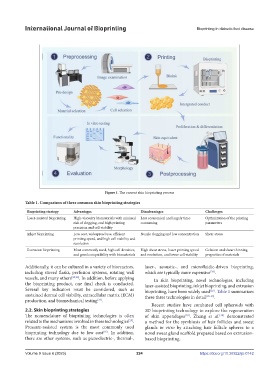
                                              Figure 1. The current skin bioprinting process

            Table 1. Comparison of three common skin bioprinting strategies

             Bioprinting strategy  Advantages                Disadvantages               Challenges
             Laser-assisted bioprinting  High-viscosity biomaterials with minimal   Less economical and largely time-  Optimization of the printing
                                risk of clogging, and high printing   consuming          parameters
                                precision and cell viability
             Inkjet bioprinting  Low cost, widespread use, efficient   Nozzle clogging and low concentration  Shear stress
                                printing speed, and high cell viability and
                                resolution
             Extrusion bioprinting  Most commonly used, high cell densities,   High shear stress, lower printing speed   Gelation and shear thinning
                                and good compatibility with biomaterials  and resolution, and lower cell viability  properties of materials

            Additionally, it can be cultured in a variety of bioreactors,   laser-,  acoustic-,  and microfluidic-driven bioprinting,
            including stirred flasks, perfusion systems, rotating wall   which are typically more expensive .
                                                                                           [26]
            vessels, and many others [23,26] . In addition, before applying    In skin bioprinting, novel technologies, including
            the bioprinting product, one final check is conducted.   laser-assisted bioprinting, inkjet bioprinting, and extrusion
            Several key indicators must be considered, such as   bioprinting, have been widely used . Table 1 summarizes
                                                                                           [26]
            sustained dermal cell viability, extracellular matrix (ECM)   these three technologies in detail [25-29] .
            production, and biomechanical testing .
                                           [23]
                                                                  Recent studies have combined cell spheroids with
            2.2. Skin bioprinting strategies                   3D bioprinting technology to explore the regeneration
            The  nomenclature  of  bioprinting  technologies  is often   of skin appendages [29] . Zhang  et al. [30]  demonstrated
            related to the mechanisms involved in these technologies .   a method for the symbiosis of hair follicles and sweat
                                                        [25]
            Pressure-assisted system is the most commonly used   glands  in vitro  by  attaching  hair  follicle  spheres  to  a
            bioprinting technology due to low cost . In addition,   novel sweat gland scaffold prepared based on extrusion-
                                             [25]
            there are other systems, such as piezoelectric-, thermal-,   based bioprinting.

            Volume 9 Issue 6 (2023)                        224                        https://doi.org/10.36922/ijb.0142

