


Page 48 - IJOCTA-15-4
P. 48
Kazemi et al. / IJOCTA, Vol.15, No.4, pp.578-593 (2025)
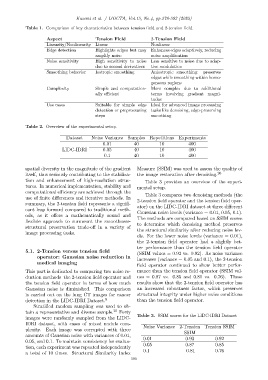
            Table 1. Comparison of key characteristics between tension field and 2-tension field.

                      Aspect               Tension Field            2-Tension Field
                      Linearity/Nonlinearity  Linear                Nonlinear
                      Edge detection       Highlights edges but may  Enhances edges adaptively, reducing
                                           amplify noise            noise amplification
                      Noise sensitivity    High sensitivity to noise  Less sensitive to noise due to adap-
                                           due to second derivatives  tive modulation
                      Smoothing behavior   Isotropic smoothing      Anisotropic smoothing:  preserves
                                                                    edges while smoothing within homo-
                                                                    geneous regions
                      Complexity           Simple and computation-  More complex due to additional
                                           ally efficient           terms involving gradient magni-
                                                                    tudes
                      Use cases            Suitable for simple edge Ideal for advanced image processing
                                           detection or preprocessing  tasks like denoising, edge-preserving
                                           steps                    smoothing

            Table 2. Overview of the experimental setup.

                              Dataset     Noise Variance Samples Repetitions Experiments
                                               0.01          40         10           400
                             LIDC-IDRI         0.05          40         10           400
                                               0.1           40         10           400


            spatial diversity in the magnitude of the gradient  Measure (SSIM) was used to assess the quality of
            itself, thus seriously contributing to the stabiliza-  the image restoration after denoising. 26
            tion and enhancement of high-resolution struc-        Table 3 provides an overview of the experi-
            tures. In numerical implementation, stability and  mental setup.
            computational efficiency are achieved through the
                                                                  Table 3 compares two denoising methods (the
            use of finite differences and iterative methods. In  2-tension field operator and the tension field oper-
            summary, the 2-tension field represents a signifi-  ator) on the LIDC-IDRI dataset at three different
            cant leap forward compared to traditional meth-   Gaussian noise levels (variance = 0.01, 0.05, 0.1).
            ods, as it offers a mathematically sound and      The methods are compared based on SSIM scores
            flexible approach to surmount the smoothness-
                                                              to determine which denoising method preserves
            structural preservation trade-off in a variety of
                                                              the structural similarity after reducing noise lev-
            image processing tasks.
                                                              els. For the lower noise levels (variance = 0.01),
                                                              the 2-tension field operator had a slightly bet-
                                                              ter performance than the tension field operator
            5.1. 2-Tension versus tension field               (SSIM values = 0.93 vs. 0.92). As noise variance
                 operator: Gaussian noise reduction in        increases (variance = 0.05 and 0.1), the 2-tension
                 medical imaging
                                                              field operator continued to show better perfor-
            This part is dedicated to comparing two noise re-  mance than the tension field operator (SSIM val-
            duction methods–the 2-tension field operator and  ues = 0.87 vs. 0.85 and 0.81 vs. 0.76). These
            the tension field operator–in terms of how much   results show that the 2-tension field operator has
            Gaussian noise is diminished. This comparison     an increased robustness factor, which preserves
            is carried out on the lung CT images for cancer   structural integrity under higher noise conditions
            detection in the LIDC-IDRI Dataset. 8             than the tension field operator.
                Stratified random sampling was used to ob-
            tain a representative and diverse sample. 25  Forty
                                                              Table 3. SSIM scores for the LIDC-IDRI Dataset
            images were randomly sampled from the LIDC-
            IDRI dataset, with cases of mixed nodule com-
                                                                 Noise Variance 2-Tension Tension SSIM
            plexity. Each image was corrupted with three
                                                                                   SSIM
            amounts of Gaussian noise with variances of 0.01,
                                                                 0.01              0.93          0.92
            0.05, and 0.1. To maintain consistency for evalua-
                                                                 0.05              0.87          0.85
            tion, each experiment was repeated independently
                                                                 0.1                0.81         0.76
            a total of 10 times. Structural Similarity Index
                                                           590

