


Page 125 - IMO-1-1
P. 125
Innovative Medicines & Omics                              Promising molecule against SARS-CoV-2 nucleocapsid


                         A


                         B


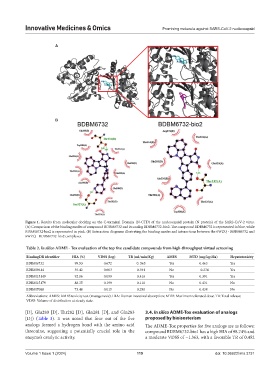
            Figure 1. Results from molecular docking on the C-terminal Domain (N-CTD) of the nucleocapsid protein (N protein) of the SARS-CoV-2 virus.
            (A) Comparison of the binding modes of compound BDBM6732 and its analog BDBM6732-bio2. The compound BDBM6732 is represented in blue, while
            BDBM6732-bio2 is represented in pink. (B) Interaction diagrams illustrating the binding modes and interactions between the 6WZQ - BDBM6732 and
            6WZQ - BDBM6732-bio2 complexes.

            Table 2. In silico ADME ‑ Tox evaluation of the top five candidate compounds from high‑throughput virtual screening

            BindingDB identifier  HIA (%)  VDSS (log)   TR (ml/min/Kg)  AMES      MTD (mg/kg/dia)  Hepatotoxicity
            BDBM6732             99.53      −0.672         0. 565        Yes          0.463        Yes
            BDBM9614             55.42      −0.603         0.391         No          −0.234        Yes
            BDBM15149            92.06      −0.099         0.416         Yes          0.391        Yes
            BDBM15179            88.35      −0.199         0.110         No           0.431        No
            BDBM7088             73.48      −0.015         0.280         No           0.438        No
            Abbreviations: AMES: AMES toxicity test (mutagenesis); HIA: Human intestinal absorption; MTD: Maximum tolerated dose; TR: Total release;
            VDSS: Volume of distribution at steady state.

            [D], Glu280 [D], Thr282 [D], Gln281 [D], and Gln283   3.4. In silico ADME-Tox evaluation of analogs
            [D]) (Table 3). It was noted that four out of the five   proposed by bioisosterism
            analogs formed a hydrogen bond with the amino acid   The ADME-Tox properties for five analogs are as follows:
            threonine, suggesting a potentially crucial role in the   compound BDBM6732-bio1 has a high HIA of 98.74% and
            enzyme’s catalytic activity.                       a moderate VDSS of −1.363, with a favorable TR of 0.452


            Volume 1 Issue 1 (2024)                        119                               doi: 10.36922/imo.3731

