


Page 10 - ITPS-6-2
P. 10
INNOSC Theranostics and
            Pharmacological Sciences                                                     Theranostics in neurosurgery


                                                               Alzheimer’s disease (AD), are characterized by a decreased
                                                               expression of SVA2 with a decreased synaptic density [42,43] .
                                                               Various  therapeutic modalities  can  be  used  to slow  the
                                                               progression of neurodegenerative disorders, such as
                                                               electrical neural stimulation, and these forms of treatment
                                                               can be paired with [ C]UCB-J to provide active feedback
                                                                               11
                                                               while implementing therapeutic measures . The measure
                                                                                                [44]
                                                               of SVA2 by [ C]UCB-J has a remarkable diagnostic
                                                                           11
                                                               capability in neurodegenerative diseases. It has long been
                                                               and continues to be the standard radiotracer to diagnose
                                                               different forms of dementia, as well as their severity and
                                                                                         [42]
                                                               varying cognitive manifestations . For instance, in one
                                                               preclinical study by Bertoglio et al. using an animal model,
                                                               PET scans were conducted for two groups of mice: One
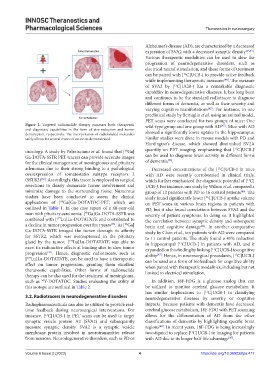
            Figure  2.  Targeted radionuclide therapy possesses both therapeutic   wild-type group and one group with AD . Mice with AD
                                                                                               [45]
            and diagnostic capabilities in the form of size reduction and tumor   showed a significantly lower uptake in the hippocampus.
            demarcation, respectively. The incorporation of radiolabeled molecules
            safely allows for several routes of action as demonstrated.  Similar studies were done in mouse models with PD and
                                                               Huntington’s disease, which showed diminished SV2A
                                                                                                     11
            oncology. A study by Palmisciano et al. found that [ Ga]  quantity on PET imaging, emphasizing that [ C]UCB-J
                                                      68
            Ga-DOTA-SSTR PET tracers can provide accurate images   can be used to diagnose brain activity in different forms
                                                                        [45]
            for the clinical management of meningiomas and pituitary   of dementia .
            adenomas due to their strong binding to a pathological   Decreased concentrations of the [ C]UCB-J in mice
                                                                                              11
            overexpression of somatostatin subtype receptors 2   with AD were recently corroborated in clinical trials,
            (SSTR2) . Accordingly, this tracer is employed in surgical   which further emphasized the diagnostic potential of [ C]
                  [32]
                                                                                                          11
            resections  to clearly demarcate tumor involvement and   UCB-J. For instance, one study by Wilson et al. compared a
            minimize damage to the surrounding tissue. Numerous   group of 12 patients with PD to 16 control patients . The
                                                                                                       [46]
            studies have been conducted to assess the clinical   study found significantly lower [ C]UCB-J uptake volume
                                                                                         11
            applications of [ Ga]Ga-DOTATOC-PET, which are     on PET scans in various brain regions in patients with
                           68
            outlined in  Table  1. In one case report of a 68-year-old   PD, but it also found correlations between SVA2 and the
            man with pituitary carcinoma, [ Ga]Ga-DOTA-SSTR was   severity of patient symptoms. In doing so, it highlighted
                                     68
            combined with [ Lu]Lu-DOTATATE and contributed to   the correlation between synaptic density and subsequent
                         177
            a decline in tumor progression over four years . As [ Ga]  brain and cognitive damage . In another comparative
                                                      68
                                                [33]
                                                                                      [46]
            Ga-DOTA-SSTR imaged the tumor through its affinity   study by Chen et al., ten patients with AD were compared
            for SSTR2, which was overexpressed in the pituitary   to 11 control patients. The study found a 41% reduction
            gland by the tumor, [ Lu]Lu-DOTATATE was able to   in  hippocampal  [ C]UCB-J  in  patients  with  AD,  and  it
                              177
                                                                             11
            exert its radioactive effects at binding sites to slow tumor   expanded on this finding by linking [ C]UCB-J to cognitive
                                                                                           11
            progression . Hence, diagnostic radiotracers, such as   ability . Hence, in neurosurgical procedures, [ C]UCB-J
                     [33]
                                                                                                     11
                                                                    [47]
            [ Lu]Lu-DOTATATE, can be used to have a therapeutic   can be used as a form of biofeedback for cognitive ability
            177
            effect on tumor progression, granting them excellent   when paired with therapeutic modalities, including but not
            theranostic capabilities. Other forms of radionuclide   limited to electrical stimulation.
            therapy can be also used for the treatment of meningioma,
            such  as  Y-DOTATOC.  Studies  evaluating  the  utility  of   In addition, 18F-FDG is a glucose analog that can
                   90
            this isotope are outlined in Table 2.              be utilized to monitor cerebral glucose metabolism. It
                                                               has similar implications to [ C]UCB-J in classifying
                                                                                        11
            3.2. Radiotracers in neurodegenerative disorders   neurodegenerative diseases by severity or cognitive
            Radiopharmaceuticals can also be utilized to provide real-  impacts. Because patients with dementia have decreased
            time feedback during neurosurgical interventions. For   cerebral glucose metabolism, 18F-FDG with PET scanning
            instance, [ C]UCB-J in PET scans can be used to target   allows for the differentiation of AD from the other
                    11
            synaptic  vesicle  protein  A2 (SVA2) and  subsequently   classifications of dementia by highlighting specific brain
            measure synaptic density. SVA2 is a synaptic vesicle   regions . In recent years, 18F-FDG is being increasingly
                                                                     [48]
            membrane  protein  involved  in  neurotransmitter  release   investigated to replace [ C]UCB-J in imaging for patients
                                                                                  11
            from neurons. Neurodegenerative disorders, such as PD or   with AD due to its longer half-life advantage .
                                                                                                  [47]
            Volume 6 Issue 2 (2023)                         4                         https://doi.org/10.36922/itps.417

