


Page 55 - ITPS-7-2
P. 55
INNOSC Theranostics and
            Pharmacological Sciences                                            Cardiac metabolism in health and disease


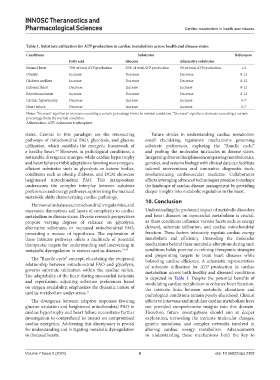
            Table 1. Substrate utilization for ATP production in cardiac metabolism across health and disease states
            Conditions                                      Substrates                               References
                              Fatty acid              Glucose                 Alternative substrates
            Normal heart      70% of total ATP production  25% of total ATP production  5% of total ATP production  1,2
            Obesity           Increase                Decrease                Decrease                 8-12
            Diabetes mellitus  Increase               Decrease                Decrease                 8-12
            Ischemic heart    Decrease                Increase                Increase                 8-12
            Reperfusion heart  Increase               Decrease                Decrease                 8-12
            Cardiac hypertrophy  Decrease             Increase                Increase                  5-7
            Heart failure     Decrease                Increase                Increase                  5-7
            Notes: “Increase” signifies an increase exceeding a certain percentage from the normal condition; “Decrease” signifies a decrease exceeding a certain
            percentage from the normal condition.
            Abbreviation: ATP: Adenosine triphosphate.

            states. Central to this paradigm are the intersecting   Future strides in understanding cardiac metabolism
            pathways  of  mitochondrial FAO,  glycolysis,  and glucose   entail elucidating regulatory mechanisms governing
            utilization, which establish the energetic framework of   substrate preferences, exploring the “Randle cycle,”
            a healthy heart.  However, in pathological conditions, a   and probing the molecular intricacies in disease states.
                         3,4
            noticeable divergence emerges: while cardiac hypertrophy   Integrating diverse disciplines encompassing metabolomics,
            and heart failure exhibit adaptations favoring more oxygen-  genetics, and systems biology with clinical data can facilitate
            efficient substrates such as glycolysis or ketone bodies,   tailored interventions and innovative diagnostic tools,
            conditions such as obesity, diabetes, and DCM showcase   revolutionizing cardiovascular medicine. Collaborative
            heightened mitochondrial FAO. This juxtaposition   efforts leveraging advanced technologies promise to reshape
            underscores the complex interplay between substrate   the landscape of cardiac disease management by providing
            preferences and energy pathways, epitomizing the nuanced   deeper insights into metabolic regulation in the heart.
            metabolic shifts characterizing cardiac pathology.
              Hormonal imbalances, mitochondrial irregularities, and   10. Conclusion
            enzymatic disruptions add layers of complexity to cardiac   Understanding the profound impact of metabolic disorders
            metabolism in disease states. Diverse research perspectives   and heart diseases on myocardial metabolism is crucial,
            propose varying degrees of reliance on glycolysis,   as these conditions influence various facets such as energy
            alternative substrates, or increased mitochondrial FAO,   demand, substrate utilization, and cardiac mitochondrial
            presenting a mosaic of hypotheses. The exploration of   function. These factors intricately regulate cardiac energy
            these intricate pathways offers a multitude of potential   metabolism  and  efficiency.  Unraveling  the  molecular
            therapeutic targets for understanding and intervening in   mechanisms behind these metabolic alterations during such
            metabolic dysregulation in various cardiac diseases. 13-15  conditions holds promise in refining therapeutic strategies
                                                               and pinpointing targets to treat heart diseases while
              The “Randle cycle” concept, elucidating the reciprocal   bolstering  cardiac  efficiency.  A  schematic  representation
            relationship between mitochondrial FAO and glycolysis,   of substrate utilization for ATP production in cardiac
            governs substrate utilization within the cardiac milieu.   metabolism across both healthy and diseased conditions
            The adaptability of the heart during myocardial ischemia   is depicted in  Table 1. Despite the potential benefits of
            and reperfusion, adjusting substrate preferences based   modulating cardiac metabolism to enhance heart function,
            on oxygen availability, emphasizes the dynamic nature of   the intricate links between metabolic alterations and
            cardiac metabolism under stress. 11                pathological conditions remain poorly elucidated. Clinical
              The divergence between adaptive responses favoring   efforts to intervene and modulate cardiac metabolism have
            glucose oxidation and heightened mitochondrial FAO in   not provided comprehensive insights into this domain.
            cardiac hypertrophy and heart failure necessitates further   Therefore, future investigations should aim at deeper
            investigation to comprehend its impact on compromised   exploration, unraveling the intricate molecular changes,
            cardiac energetics. Addressing this discrepancy is pivotal   genetic mutations, and complex networks involved in
            for understanding and mitigating metabolic dysregulation   altering cardiac energy metabolism. Advancements
            in diseased hearts.                                in understanding these mechanisms hold the key to


            Volume 7 Issue 2 (2024)                         6                                doi: 10.36922/itps.2302

