


Page 17 - ITPS-7-4
P. 17
INNOSC Theranostics and
            Pharmacological Sciences                                                  Neurobiology of gaming disorder


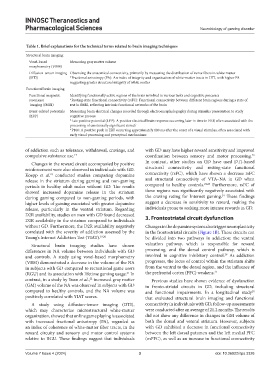
            Table 1. Brief explanations for the technical terms related to brain imaging techniques
            Structural brain imaging
             Voxel-based       Measuring gray matter volume
             morphometry (VBM)
             Diffusion-tensor imaging  Observing the anatomical connectivity, primarily by measuring the distribution of nerve fibers in white matter
             (DTI)             *Fractional anisotropy (FA): An index of integrity and organization of white-matter tracts in DTI, with higher FA
                               suggesting greater structural integrity of white matter
            Functional brain imaging
             Functional magnetic   Identifying functionally active regions of the brain involved in various tasks and cognitive processes
             resonance         *Resting-state functional connectivity (rsFC): Functional connectivity between different brain regions during a state of
              imaging (fMRI)   rest in fMRI, reflecting intrinsic functional networks of the brain
             Event-related potentials   Measuring brain electrical changes recorded through electroencephalography during stimulus presentation to study
             (ERP)             cognitive process
                               *Late positive potential (LPP): A positive electrical brain response occurring later in time in ERP, often associated with the
                               processing of emotionally significant stimuli
                               *P100: A positive peak in ERP occurring approximately 100 ms after the onset of a visual stimulus, often associated with
                               early visual processing and perceptual mechanisms


            of addiction such as tolerance, withdrawal, cravings, and   with GD may have higher reward sensitivity and improved
            compulsive substance use. 17                       coordination between sensory and motor processing.
                                                                                                            23
              Changes in the reward circuit accompanied by positive   In contrast, other studies on GD have used DTI-based
            reinforcement were also observed in individuals with GD.   structural connectivity and resting-state functional
            Koepp  et al.  conducted studies comparing dopamine   connectivity (rsFC), which have shown a decrease rsFC
                      18
            release in the striatum during gaming and non-gaming   and structural connectivity of VTA–NA in GD when
            periods in healthy adult males without GD. The results   compared to healthy controls. 24,25  Furthermore, rsFC of
            showed increased dopamine release in the striatum   these regions was significantly negatively associated with
                                                                                               24
            during  gaming  compared  to  non-gaming  periods,  with   the craving rating for Internet gaming.  These findings
            higher levels of gaming associated with greater dopamine   suggest a decrease in sensitivity to reward, making the
            release,  particularly  in the ventral  striatum.  Regarding   individuals prone to seeking more intense rewards in GD.
            D2R availability, studies on men with GD found decreased   3. Frontostriatal circuit dysfunction
            D2R availability in the striatum compared to individuals
            without GD. Furthermore, the D2R availability negatively   Changes in the dopamine system also trigger neuroplasticity
            correlated with the severity of addiction assessed by the   in the frontostriatal circuits (Figure 1B). These circuits can
            Young’s Internet Addiction Test (YIAT). 19,20      be divided into two pathways in addiction: the ventral
              Structural brain imaging studies have shown      valuation pathway, which is responsible for reward
            differences  in  NA  volume  between  individuals  with  GD   processing, and the dorsal control pathway, which is
                                                                                                 26
            and controls. A  study using voxel-based morphometry   involved in cognitive inhibitory control.  As addiction
            (VBM) demonstrated a decrease in the volume of the NA   progresses, the locus of control within the striatum shifts
            in subjects with GD compared to recreational game users   from the ventral to the dorsal region, and the influence of
            (RGU) and its association with lifetime gaming usage.  In   the prefrontal cortex (PFC) weakens. 27
                                                       21
            contrast, in a study by Yuan et al.,  increased gray matter   Previous studies have shown evidence of dysfunction
                                       22
            (GM) volume of the NA was observed in subjects with GD   in fronto-striatal circuits in GD, including structural
            compared to healthy controls, and the NA volume was   and functional impairments. In a longitudinal study
                                                                                                            28
            positively correlated with YIAT scores.            that evaluated structural brain imaging and functional
              A study using diffusion-tensor imaging (DTI),    connectivity in individuals with GD, follow-up assessments
            which may characterize microstructural white-matter   were conducted after an average of 21.2 months. The results
            organization, showed that online game playing is associated   did not show any difference in changes in GM volume of
            with increased fractional anisotropy (FA), regarded as   both the dorsal and ventral striatum. However, subjects
            an index of coherence of white-matter fiber tracts, in the   with GD exhibited a decrease in functional connectivity
            reward circuity and sensory and motor control systems   between the left dorsal putamen and the left medial PFC
            relative  to  RGU.  These  findings  suggest  that  individuals   (mPFC), as well as an increase in functional connectivity


            Volume 7 Issue 4 (2024)                         3                                doi: 10.36922/itps.3326

