


Page 47 - JCAU-5-3
P. 47
Journal of Chinese
            Architecture and Urbanism                                                       Envisioning rural futures


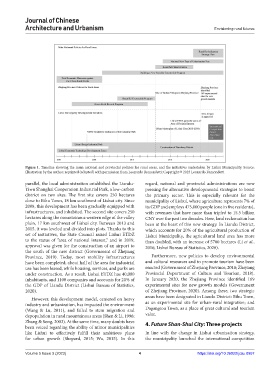
            Figure 1. Timeline showing the main national and provincial policies for rural areas, and the initiatives undertaken by Lishui Municipality. Source:
            Illustration by the author; reprinted (adapted) with permission from Leonardo Ramondetti; Copyright © 2023 Leonardo Ramondetti

            parallel, the local administration established the Liandu-  regard, national and provincial administrations are now
            Yiwu Shanghai Cooperation Industrial Park, a low-carbon   pressing for alternative developmental strategies to boost
            district on two sites. The first site covers 250 hectares   the primary sector. This is especially relevant for the
            close to Bihu Town, 18 km southwest of Lishui city. Since   municipality of Lishui, where agriculture represents 7% of
            2008, this development has been gradually equipped with   its GDP and employs 475,000 people (one in five residents),
            infrastructures, and inhabited. The second site covers 250   with revenues that have more than tripled to 15.5 billion
            hectares along the mountainous western edge of the valley   CNY over the past two decades. Here, land reclamation has
            plain, 17 km southwest of Lishui city. Between 2013 and   been at the heart of this new strategy. In Liandu District,
            2015, it was leveled and divided into plots. Thanks to this   which accounts for 20% of the agricultural production of
            set of initiatives, the State Council raised Lishui ETDZ   Lishui Municipality, the agricultural land area has more
            to the status of “area of national interest,” and in 2019,   than doubled, with an increase of 5700 hectares (Li et al.,
            approval was given for the construction of an airport to   2016; Lishui Bureau of Statistics, 2020).
            the south of the new district (Government of Zhejiang
            Province, 2019). Today, most mobility infrastructures   Furthermore, new policies to develop environmental
            have been completed; about half of the area for industrial   and cultural resources and to promote tourism have been
            use has been leased, while housing, services, and parks are   enacted (Government of Zhejiang Province, 2018; Zhejiang
            under construction. As a result, Lishui ETDZ has 40,000   Provincial Department of Culture and Tourism, 2018).
            inhabitants, and 1100 companies and accounts for 20% of   In January 2020,  the Zhejiang Province  identified 169
            the GDP of Liandu District (Lishui Bureau of Statistics,   experimental sites for new growth models (Government
            2020).                                             of Zhejiang Province, 2020). Among these, two strategic

              However, this development model, centered on heavy   areas have been designated in Liandu District: Bihu Town,
            industry and urbanization, has impacted the environment   as an experimental site for urban-rural integration; and
            (Wang &  Lu, 2011), and failed to stem  migration and   Dagangtou Town, as a place of great cultural and tourism
            depopulation in rural mountainous areas (Shen & Li, 1996;   value.
            Zhang & Song, 2003). At the same time, many doubts have   4. Future Shan-Shui City: Three projects
            been voiced regarding the ability of minor municipalities
            like Lishui to effectively fulfill their ambitious plans   In line with the change in Lishui urbanization strategy,
            for urban growth (Shepard, 2015; Wu, 2015). In this   the municipality launched the international competition


            Volume 5 Issue 3 (2023)                         4                        https://doi.org/10.36922/jcau.0957

