


Page 52 - JCAU-5-3
P. 52
Journal of Chinese
            Architecture and Urbanism                                                       Envisioning rural futures


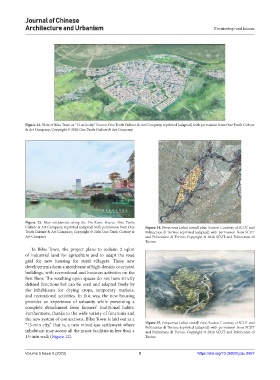
            Figure 12. View of Bihu Town as “15-min city.” Source: One Tenth Culture & Art Company; reprinted (adapted) with permission from One Tenth Culture
            & Art Company; Copyright © 2020 One Tenth Culture & Art Company


            Figure  13. New settlements along the Ou River. Source: One Tenth
            Culture & Art Company; reprinted (adapted) with permission from One   Figure 14. Prosperous Lishui overall plan. Source: Courtesy of SCUT and
            Tenth Culture & Art Company; Copyright © 2020 One Tenth Culture &   Politecnico di Torino; reprinted (adapted) with permission from SCUT
            Art Company                                        and Politecnico di Torino; Copyright © 2020 SCUT and Politecnico di
                                                               Torino
              In Bihu Town, the project plans to reclaim 2 sqkm
            of  industrial  land  for  agriculture  and  to  adapt  the  road
            grid for new housing for rural villagers. These new
            developments form a membrane of high-density courtyard
            buildings, with recreational and business activities on the
            first floor. The resulting open spaces do not have strictly
            defined functions but can be used and adapted freely by
            the inhabitants for drying crops, temporary markets,
            and recreational activities. In this way, the new housing
            provides an experience of urbanity while preventing a
            complete detachment from farmers’ traditional habits.
            Furthermore, thanks to the wide variety of functions and
            the new system of connections, Bihu Town is laid out as a
            “15-min city,” that is, a new mixed-use settlement where   Figure 15. Prosperous Lishui overall view. Source: Courtesy of SCUT and
                                                               Politecnico di Torino; reprinted (adapted) with permission from SCUT
            inhabitant may access all the major facilities in less than a   and Politecnico di Torino; Copyright © 2020 SCUT and Politecnico di
            15-min walk (Figure 12).                           Torino


            Volume 5 Issue 3 (2023)                         9                        https://doi.org/10.36922/jcau.0957

