


Page 54 - JCAU-5-3
P. 54
Journal of Chinese
            Architecture and Urbanism                                                       Envisioning rural futures


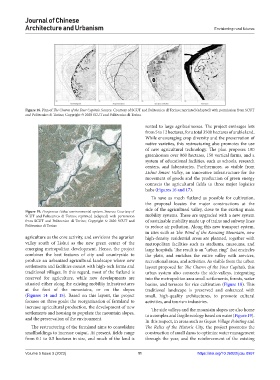
            Figure 18. Plan of The Charm of the Four Capitals. Source: Courtesy of SCUT and Politecnico di Torino; reprinted (adapted) with permission from SCUT
            and Politecnico di Torino; Copyright © 2020 SCUT and Politecnico di Torino

                                                               rented to large agribusinesses. The project envisages lots
                                                               from 5 to 12 hectares, for a total 3500 hectares of arable land.
                                                               While encouraging crop diversity and the preservation of
                                                               native varieties, this restructuring also promotes the use
                                                               of new agricultural technology. The plan proposes 180
                                                               greenhouses over 860 hectares, 150 vertical farms, and a
                                                               system of educational facilities, such as schools, research
                                                               centers, and laboratories.  Furthermore, as  visible from
                                                               Lishui Smart Valley, an innovative infrastructure for the
                                                               movement of goods and the production of green energy
                                                               connects the agricultural fields to three major logistics
                                                               hubs (Figures 16 and 17).
                                                                 To save as much flatland as possible for cultivation,
                                                               the proposal locates the major constructions at the
                                                               side of the agricultural valley, close to the existing main
            Figure 19. Prosperous Lishui environmental system. Source: Courtesy of
            SCUT and Politecnico di Torino; reprinted (adapted) with permission   mobility systems. These are upgraded with a new system
            from  SCUT  and  Politecnico  di  Torino;  Copyright  © 2020  SCUT  and   of sustainable mobility made up of trains and subway lines
            Politecnico di Torino                              to reduce air pollution. Along this new transport system,
                                                               in sites such as The Wind of the Koucang Mountain, new
            agriculture as the core activity, and envisions the agrarian   high-density residential areas are planned, together with
            valley south of Lishui as the new green center of the   metropolitan facilities such as stadiums, museums, and
            emerging  metropolitan  development.  Hence,  the  project   large hospitals. The result is an “urban ring” that encircles
            combines the best features of city and countryside to   the plain, and enriches the entire valley with services,
            produce an urbanized agricultural landscape where new   recreational areas, and activities. As visible from the urban
            settlements and facilities coexist with high-tech farms and   layout proposed for The Charm of the Four Capitals, this
            traditional villages. In this regard, most of the flatland is   urban system also connects the side-valleys, integrating
            reserved for agriculture, while new developments are   into the metropolitan area small settlements, forests, water
            situated either along the existing mobility infrastructures   basins, and terraces for rice cultivation (Figure 18). This
            at the foot of the mountains, or on the slopes     traditional landscape is preserved and enhanced with
            (Figures 14 and 15). Based on this layout, the project   small, high-quality architectures, to promote cultural
            focuses on three goals: the reorganization of farmland to   activities, and tourism industries.
            increase agricultural production, the development of new   The side valleys and the mountain slopes are also home
            settlements and housing to populate the mountain slopes,   to a complex and fragile ecology based on water (Figure 19).
            and the preservation of the environment.           In this respect, in areas such as Guyan Village Painting and
              The restructuring of the farmland aims to consolidate   The Relics of the Historic City, the project promotes the
            smallholdings to increase output. At present, fields range   construction of small dams to optimize water management
            from 0.1 to 0.5 hectares in size, and much of the land is   through the year, and the reinforcement of the existing


            Volume 5 Issue 3 (2023)                         11                       https://doi.org/10.36922/jcau.0957

