


Page 44 - JCAU-5-4
P. 44
Journal of Chinese
            Architecture and Urbanism                                                   Learning from the countryside


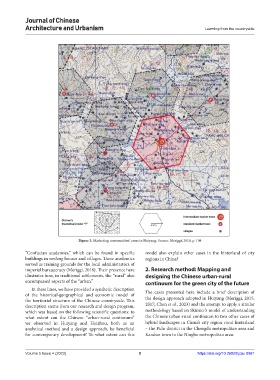
                                  Figure 3. Marketing communities’ areas in Huiyang. Source: Meriggi, 2018, p. 108

            “Confucian academies,” which can be found in specific   model also explain other cases in the hinterland of city
            buildings in weilong houses and villages. These academics   regions in China?
            served as training grounds for the local administrators of
            imperial bureaucracy (Meriggi, 2018). Their presence here   2. Research method: Mapping and
            illustrates how, in traditional settlements, the “rural” also   designing the Chinese urban-rural
            encompassed aspects of the “urban.”                continuum for the green city of the future
              In these lines, we have provided a synthetic description
            of the historical-geographical and economic model of   The cases presented here include a brief description of
            the territorial structure of the Chinese countryside. This   the design approach adopted in Huiyang (Meriggi, 2015,
            description stems from our research and design program,   2017; Chen et al., 2023) and the attempt to apply a similar
            which was based on the following scientific questions: to   methodology based on Skinner’s model of understanding
            what extent can the Chinese “urban-rural continuum”   the Chinese urban-rural continuum to two other cases of
            we observed in Huiyang and Huizhou, both as an     hybrid landscapes in China’s city region rural hinterland
            analytical  method  and  a  design  approach,  be  beneficial   – the Pidu district in the Chengdu metropolitan area and
            for contemporary development? To what extent can this   Kandun town in the Ningbo metropolitan area.


            Volume 5 Issue 4 (2023)                         5                        https://doi.org/10.36922/jcau.0981

