


Page 56 - JCAU-5-4
P. 56
Journal of Chinese
            Architecture and Urbanism                                                   Learning from the countryside


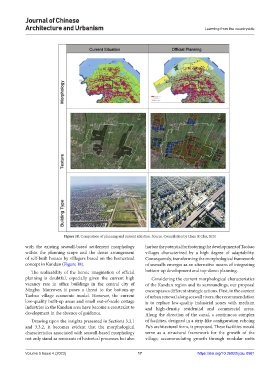
                            Figure 18. Comparison of planning and current situation. Source: Compilation by Chen & Chu, 2021

            with the existing seawall-based settlement morphology   harbor the potential for fostering the development of Taobao
            within the planning scope and the dense arrangement   villages characterized by a high degree of adaptability.
            of self-built houses by villagers based on the homestead   Consequently, transforming the morphological framework
            concept in Kandun (Figure 18).                     of seawalls emerges as an alternative means of integrating

              The realizability of the heroic imagination of official   bottom-up development and top-down planning.
            planning is doubtful, especially given the current high   Considering the current morphological characteristics
            vacancy rate in office buildings in the central city of   of the Kandun region and its surroundings, our proposal
            Ningbo. Moreover, it poses a threat to the bottom-up   encompasses different strategic actions. First, in the context
            Taobao village economic model. However, the current   of urban renewal along seawall rivers, the recommendation
            low-quality built-up areas and small out-of-scale cottage   is to replace low-quality industrial zones with medium
            industries in the Kandun area have become a constraint to   and high-density residential and commercial areas.
            development in the absence of guidance.            Along the direction of the canal, a continuous complex
              Drawing upon the insights presented in Sections 3.3.1   of facilities, designed in a strip-like configuration echoing
            and  3.3.2,  it  becomes  evident  that  the  morphological   Pu’s architectural form, is proposed. These facilities would
            characteristics associated with seawall-based morphology   serve as a structural framework for the growth of the
            not only stand as remnants of historical processes but also   village, accommodating growth through modular units


            Volume 5 Issue 4 (2023)                         17                       https://doi.org/10.36922/jcau.0981

