


Page 51 - JCAU-5-4
P. 51
Journal of Chinese
            Architecture and Urbanism                                                   Learning from the countryside


                          A                                    B


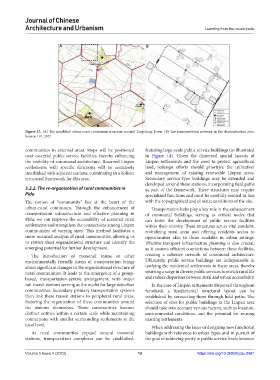
            Figure 13. (A) The simplified urban-rural continuum structure around Tangchang Town. (B) The transportation network in the demonstration area.
            Source: Lin, 2021

            communities to external areas. Stops will be positioned   featuring large-scale public service buildings (as illustrated
            near essential public service facilities, thereby enhancing   in  Figure  14). Given the dispersed spatial layouts of
            the visibility of communal architecture. Reserved Linpan   Linpan settlements and the need to protect agricultural
            settlements with specific functions will be seamlessly   land, redesign efforts should prioritize the utilization
            interlinked with adjacent stations, culminating in a holistic   and management of existing renewable Linpan areas.
            structural framework for this area.                Secondary service-type buildings may be extended and
                                                               developed around these stations, incorporating field paths
            3.2.2. The re-organization of rural communities in   as part of the framework. These structures may require
            Pidu                                               specialized functions and must be carefully erected in line
            The notion of “community” lies at the heart of the   with the topographical and climatic conditions of the site.
            urban-rural continuum. Through the enhancement of    Transportation hubs play a key role in the enhancement
            transportation infrastructure and effective planning in   of communal buildings, serving as critical nodes that
            Pidu, we can improve the accessibility of scattered rural   can foster the development of public service facilities
            settlements and strengthen the connections among Linpan   within their vicinity. These structures act as vital conduits,
            communities of varying sizes. This method facilitates a   revitalizing rural areas and offering residents access to
            more nuanced analysis of rural communities, allowing us   opportunities akin to those available in urban settings.
            to restore their organizational structure and identify the   Effective transport infrastructure planning is also crucial,
            emerging potential for further development.        as it ensures efficient connections between these facilities,
              The introduction of monorail trains or other     creating a cohesive network of communal architecture.
            environmentally friendly forms of transportation brings   Ultimately, public service buildings are indispensable in
            about significant changes in the organizational structure of   unifying the residential settlements in these areas, thereby
            rural communities. It leads to the emergence of a group-  spurring a surge in diverse public services to enrich rural life
            based, transportation-centric arrangement, with major   and reduce disparities between rural and urban accessibility.
            rail transit stations serving as the nuclei for large suburban   In the case of Linpan settlements dispersed throughout
            communities. Secondary primary transportation systems   farmland, a fundamental structural layout can be
            then link these transit stations to peripheral rural areas,   established by connecting them through field paths. The
            fostering the organization of these communities around   selection of sites for public buildings in the Linpan area
            the stations themselves. These communities become   should take into account various factors, such as location,
            distinct entities within a certain scale while maintaining   environmental conditions, and the potential for reusing
            connections with smaller surrounding settlements at the   existing settlements.
            local level.
                                                                 When addressing the issue of designing new functional
              As  rural  communities  expand  around  monorail   buildings with reference to urban types and in pursuit of
            stations, transportation complexes can be established,   the goal of achieving parity in public service levels between


            Volume 5 Issue 4 (2023)                         12                       https://doi.org/10.36922/jcau.0981

