


Page 34 - JCBP-2-2
P. 34
Journal of Clinical and
            Basic Psychosomatics                                            Cognitive modulation of baroreceptor afferents


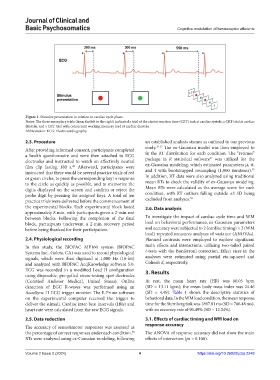
            Figure 1. Stimulus presentation in relation to cardiac cycle phase.
            Notes: The three exemplary trials (from the left to the right) indicated a trial of the choice reaction time (CRT) task at cardiac systole, a CRT trial at cardiac
            diastole, and a CRT trial with concurrent working memory load at cardiac diastole.
            Abbreviation: ECG: Electrocardiography.

            2.3. Procedure                                     an established analysis stream as outlined in our previous
            After providing informed consent, participants completed   study. 35-37  The ex-Gaussian model was then employed to
            a health questionnaire and were then attached to ECG   fit the RT distribution for each condition. The “retimes”
                                                                                          51
            electrodes and instructed to watch an affectively neutral   package  in  R  statistical  software   was  utilized  for  the
            film clip lasting 180 s.  Afterward, participants were   ex-Gaussian modeling, which estimated parameters μ, σ,
                                49
                                                                                                            35
            instructed that there would be several practice trials of red   and  τ  with  bootstrapped  resampling  (1,000  iterations).
            or green circles, to press the corresponding key in response   In addition, RT data were also analyzed using traditional
            to the circle as quickly as possible, and to memorize the   mean RTs to check the validity of ex-Gaussian modeling.
            digits displayed on the screen and confirm or reject the   Mean RTs were calculated as the average score for each
            probe digit by pressing the assigned keys. A total of ten   condition, with RT outliers falling outside ±3 SD  being
                                                                                  52
            practice trials were delivered before the commencement of   excluded from analyses.
            the experimental blocks. Each experimental block lasted   2.6. Data analysis
            approximately 8 min, with participants given a 2-min rest
            between blocks. Following the completion of the final   To investigate the impact of cardiac cycle time and WM
            block,  participants underwent a 2-min  recovery period   load on behavioral performance, ex-Gaussian parameters
            before being thanked for their participation.      and accuracy were subjected to 2 (cardiac timing) × 2 (WM
                                                               load) repeated measures analyses of variance (ANOVAs).
            2.4. Physiological recording                       Planned contrasts were employed to explore significant
            In this study, the BIOPAC MP160 system (BIOPAC     main effects and interactions, utilizing two-tailed paired
            Systems Inc., Goleta, CA) was used to record physiological   t-tests with the Bonferroni correction. Effect sizes in the
            signals, which were then digitized at 1,000  Hz (16-bit)   analyses were estimated using partial eta-squared and
            and analyzed with BIOPAC AcqKnowledge software 5.0.   Cohen’s d, respectively.
            ECG was recorded in a modified Lead II configuration   3. Results
            using disposable, pre-gelled stress-testing spot electrodes
            (ConMed Andover Medical, United States). Online    At rest, the mean heart rate (HR) was 80.05 bpm
            detection of EGC R-waves was performed using an    (SD  =  13.11  bpm); the mean body mass index was 24.46
            AccuSync 71 ECG trigger monitor. The E-Prime software   (SD  =  4.49).  Table  1 shows  the descriptive statistics of
            on the experimental computer received the trigger to   behavioral data. In the WM load condition, the mean response
            deliver the stimuli. Cardiac inter-beat intervals (IBIs) and   time for the Sternberg task was 1897.81 ms (SD = 766.48 ms),
            heart rate were calculated from the raw ECG signals.  with an accuracy rate of 90.49% (SD = 12.34%).
            2.5. Data reduction                                3.1. Effects of cardiac timing and WM load on
                                                               response accuracy
            The accuracy of sensorimotor responses was assessed as
            the percentage of correct responses under each condition.    The ANOVA of response accuracy did not show the main
                                                         50
            RTs were analyzed using ex-Gaussian modeling, following   effects of interaction (ps > 0.100).

            Volume 2 Issue 2 (2024)                         4                        https://doi.org/10.36922/jcbp.2248

