


Page 92 - JCBP-2-3
P. 92
Journal of Clinical and
            Basic Psychosomatics                                                Psychological changes in patient with ICD


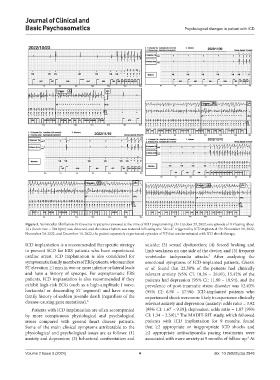
            Figure 3. Ventricular fibrillation (VF) events in patients reviewed at the time of ICD programming. On October 23, 2022, one episode of VF lasting about
            12 s (heart rate = 324 bpm) was detected, and the sinus rhythm was restored following one “shock” triggered by ICD implanted. On November 19, 2022,
            November 30, 2022, and December 10, 2022, the patient separately experienced episodes of VF that was terminated with ICD shock therapy.

            ICD implantation is a recommended therapeutic strategy   suicide; (3) sexual dysfunction; (4) forced braking and
            to prevent SCD for ERS patients who have experienced   limb weakness on one side of the device; and (5) frequent
            cardiac arrest. ICD implantation is also considered for   ventricular tachycardia attacks.  After analyzing the
                                                                                          7
            symptomatic family members of ERS patients, who manifest   emotional  symptoms  of  ICD-implanted  patients,  Ghezzi
            ST elevation ≥1 mm in two or more inferior or lateral leads   et al. found that 22.58% of the patients had clinically
            and have a history of syncope. For asymptomatic ERS   relevant anxiety (95% CI:  18.26 – 26.91),  15.42% of  the
            patients, ICD implantation is also recommended if they   patients had depression (95% CI: 11.90 – 18.94), and the
            exhibit high-risk ECG (such as a high-amplitude J wave,   prevalence of post-traumatic stress disorder was 12.43%
            horizontal or descending ST segment) and have strong   (95% CI: 6.90 – 17.96). ICD-implanted patients who
            family history of sudden juvenile death (regardless of the   experienced shock were more likely to experience clinically
            disease-causing gene mutations). 6                 relevant anxiety and depression (anxiety: odds ratio = 3.92

              Patients with ICD implantation are often accompanied   [95% CI: 1.67 – 9.19]; depression: odds ratio = 1.87 [95%
                                                                            8
            by more conspicuous physiological and psychological   CI: 1.34 – 2.59]).  The MADIT-RIT study, which followed
            issues compared with general heart disease patients.   patients with ICD implantation for 9  months, found
            Some of the main clinical symptoms attributable to the   that ≥2 appropriate or inappropriate ICD shocks and
            physiological and psychological issues are as follows: (1)   ≥2 appropriate antitachycardia pacing treatments were
            anxiety and depression; (2) behavioral confrontation and   associated with more anxiety at 9 months of follow-up.  At
                                                                                                          9

            Volume 2 Issue 3 (2024)                         4                               doi: 10.36922/jcbp.2848

