


Page 39 - JCBP-2-4
P. 39
Journal of Clinical and
            Basic Psychosomatics                                          Core depressive symptoms of peripartum women


            and EPDS6 (“coping”) and between EPDS8 (“sadness and   the postpartum network. The stability of the strength and
            misery”) and EPDS9 (“unhappiness and crying”).     closeness in all three PND networks was maintained.
            3.3. Network stability                               Depression was most prevalent in the postpartum
                                                               period, which is consistent with the finding of a study from
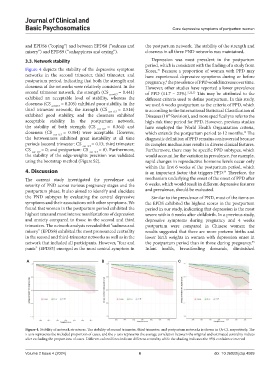
            Figure 4 depicts the stability of the depressive symptom   Korea.  Because a proportion of women with PPD may
                                                                    31
            networks in the second trimester, third trimester, and   have experienced depressive symptoms during or before
            postpartum period, indicating that both the strength and   pregnancy,  the prevalence of PPD would increase over time.
                                                                        6
            closeness of the networks were relatively consistent. In the   However, other studies have reported a lower prevalence
            second trimester network, the strength (CS  cor=0.7  = 0.441)   of PPD (11.7 – 23%). 5,32,33  This may be attributed to the
            exhibited an acceptable level of stability, whereas the   different criteria used to define postpartum. In this study,
            closeness (CS  cor=0.7  = 0.205) exhibited poor stability. In the   we used 6 weeks postpartum as the criteria of PPD, which
            third trimester network, the strength (CS  cor=0.7  = 0.516)   is according to the International Statistical Classification of
            exhibited good stability, and the closeness exhibited   Diseases (10  Revision), and more specifically to refer to the
                                                                         th
            acceptable  stability.  In  the  postpartum  network,   high-risk time period for PPD. However, previous studies
            the stability of both strength (CS  cor=0.7   = 0.364) and   have employed the World Health Organization criteria,
            closeness (CS  cor=0.7  = 0.364) were acceptable. However,   which extends the postpartum period to 12 months.  The
                                                                                                         14
            the  betweenness  exhibited  great  instability  at  all  time   diagnostic definition of PPD remains controversial because
            periods (second trimester: CS  cor=0.7  = 0.13; third trimester:   its complex mechanisms results in diverse clinical features.
            CS  cor=0.7  = 0; and postpartum: CS  cor=0.7  = 0). Furthermore,   Furthermore, there may be specific PPD subtypes, which
            the stability of the edge-weights precision was validated   would account for the variation in prevalence. For example,
            using the bootstrap method (Figure S2).            rapid changes in reproductive hormone levels occur only
                                                               within the first 6 weeks of the postpartum period, which
            4. Discussion                                      is an important factor that triggers PPD.  Therefore, the
                                                                                                34
            The  current  study  investigated the  prevalence and   mechanism underlying the onset of the onset of PPD after
            severity of PND across various pregnancy stages and the   6 weeks, which would result in different depressive features
            postpartum phase. It also aimed to identify and elucidate   and prevalence, should be evaluated.
            the PND subtypes by evaluating the central depressive   Similar to the prevalence of PND, most of the items on
            symptoms and their associations with other symptoms. We   the EPDS exhibited the highest scores in the postpartum
            found that women in the postpartum period exhibited the   period in our study, indicating that depression is the most
            highest rates and most intense manifestations of depression   severe within 6 weeks after childbirth. In a previous study,
            and anxiety compared to those in the second and third   depressive symptoms during pregnancy and 4  weeks
            trimesters. The network analysis revealed that “sadness and   postpartum were  compared in  Chinese women;  the
            misery” (EPDS8) exhibited the most pronounced centrality   results suggested that there are more preterm births and
            in the second and third-trimester networks as well as in the   lower birth weights in women with depression onset in
            network that included all participants. However, “fear and   the postpartum period than in those during pregnancy.
                                                                                                            35
            panic” (EPDS5) emerged as the most central symptom in   Infant health, breastfeeding demands, diminished

            A                               B                                C


            Figure 4. Stability of network structures. The stability of second trimester, third trimester, and postpartum networks is shown in (A-C), respectively. The
            x-axis represents the included proportion of cases, and the y-axis represents the average correlation between the original and estimated centrality indices
            after excluding the proportions of cases. Different colored lines indicate different centrality while the shading indicates the 95% confidence interval


            Volume 2 Issue 4 (2024)                         6                               doi: 10.36922/jcbp.4089

