


Page 61 - JCBP-2-4
P. 61
Journal of Clinical and
            Basic Psychosomatics                                                       Schizophrenia and metabolism


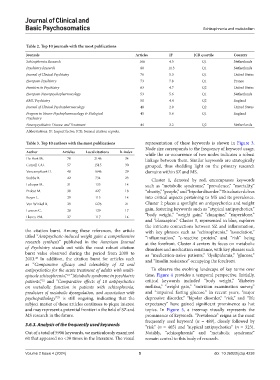
            Table 2. Top 10 journals with the most publications
            Journals                                       Articles      IF         JCR quartile    Country
            Schizophrenia Research                          166          4.5           Q1           Netherlands
            Psychiatry Research                              80          11.3          Q1           Netherlands
            Journal of Clinical Psychiatry                   76          5.3           Q1           United States
            European Psychiatry                              73          7.8           Q1           France
            Frontiers in Psychiatry                          63          4.7           Q2           United States
            European Neuropsychopharmacology                 53          5.6           Q1           Netherlands
            BMC Psychiatry                                   50          4.4           Q2           England
            Journal of Clinical Psychopharmacology           48          2.9           Q2           United States
            Progress in Neuro‑Psychopharmacology & Biological   45       5.6           Q1           England
            Psychiatry
            Neuropsychiatric Disease and Treatment           44          3.2           Q2           Netherlands
            Abbreviations: IF: Impact factor; JCR: Journal citation reports.

            Table 3. Top 10 authors with the most publications  representation  of these keywords is  shown  in  Figure  3.
                                                               Node size corresponds to the frequency of keyword usage,
            Author          Articles  Local citations  h‑index
                                                               while the co-occurrence of two nodes indicates a robust
            De Hert M.        70         2146         34       linkage between them. Similar keywords are strategically
            Correll C.U.      57         1515         30       grouped,  thus  shedding  light  on  the  primary  research
            Vancampfcort D.   48         1646         29       domains within SZ and MS.
            Stubbs B.         42          734         23         Cluster 1, denoted by red, encompasses keywords
            Leboyer M.        31          135         14       such as “metabolic syndrome,” “prevalence,” “mortality,”
            Probst M.         30          427         18       “obesity,” “people,” and “bipolar disorder.” This cluster delves
            Boyer L.          29          115         14       into critical aspects pertaining to MS and its prevalence.
            Van Winkel R.     29         1276         21       Cluster 2 places a spotlight on antipsychotics and weight
            Lancon C.         28          129         17       gain, featuring keywords such as “atypical antipsychotics,”
                                                               “body weight,” “weight gain,” “clozapine,” “risperidone,”
            Llorca P.M.       27          117         14
                                                               and “olanzapine.” Cluster 3, represented in blue, explores
                                                               the intricate connections between SZ and inflammation,
            the  citation  burst.  Among  these  references,  the  article   with key phrases such as “schizophrenia,” “association,”
            titled “Antipsychotic‑induced weight gain: a comprehensive   “inflammation,” “c-reactive protein,” and “risk” being
            research synthesis” published in the  American Journal   at the forefront. Cluster 4 centers its focus on metabolic
            of  Psychiatry stands out with the most robust citation   disorders and medication resistance, with key phrases such
            burst value observed during the period from 2008 to   as “medication-naive patients,” “dyslipidemia,” “glucose,”
            2013.  In  addition, the  citation burst  for articles such   and “insulin resistance” occupying the forefront.
                20
            as  “Comparative efficacy and tolerability of 32 oral
            antipsychotics for the acute treatment of adults with multi‑  To observe the evolving landscape of key terms over
            episode schizophrenia,”  “Metabolic syndrome in psychiatric   time, Figure 4 provides a temporal perspective. Initially,
                              21
            patients,”  and “Comparative effects of 18 antipsychotics   critical keywords included “body weight,” “diabetes
                   22
            on  metabolic  function  in  patients  with  schizophrenia,   mellitus,” “weight gain,” “nutrition examination survey,”
            predictors of metabolic dysregulation, and association with   and “impaired fasting glucose.” In recent years, “major
            psychopathology”  is still ongoing, indicating that the   depressive disorder,” “bipolar disorder,” “risk,” and “life
                         23
            subject matter of these articles continues to pique interest   expectancy” have gained significant prominence as hot
            and may represent a potential frontier in the field of SZ and   topics. In  Figure  5, a treemap visually represents the
            MS research in the future.                         prominence of keywords. “Prevalence” reigns as the most
                                                               frequently used keyword (n = 489), closely followed by
            3.6.3. Analysis of the frequently used keywords    “risk” (n = 465) and “atypical antipsychotics” (n = 323).

            Out of a total of 5906 keywords, we meticulously examined   Notably, “schizophrenia” and “metabolic syndrome”
            60 that appeared no <30 times in the literature. The visual   remain central to this body of research.


            Volume 2 Issue 4 (2024)                         5                               doi: 10.36922/jcbp.4238

