


Page 63 - JCBP-2-4
P. 63
Journal of Clinical and
            Basic Psychosomatics                                                       Schizophrenia and metabolism


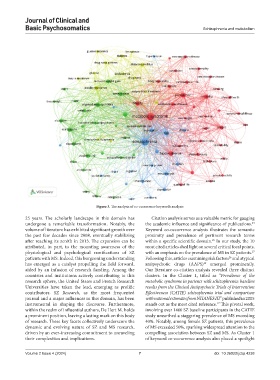
                                          Figure 3. The analysis of co-occurrence keywords analysis

            25  years. The scholarly landscape in this domain has   Citation analysis serves as a valuable metric for gauging
            undergone a remarkable transformation. Notably, the   the academic influence and significance of publications.
                                                                                                            24
            volume of literature has exhibited significant growth over   Keyword co-occurrence analysis illustrates the semantic
            the past few decades since 2008, eventually stabilizing   proximity and prevalence  of pertinent research terms
            after reaching its zenith in 2013. The expansion can be   within a specific scientific domain.  In our study, the 10
                                                                                           25
            attributed, in part, to the mounting awareness of the   most cited articles shed light on several critical focal points,
            physiological and psychological ramifications of SZ   with an emphasis on the prevalence of MS in SZ patients.
                                                                                                            17
            patients with MS. Indeed, this burgeoning understanding   Following this, articles examining risk factors  and atypical
                                                                                                  26
            has emerged as a catalyst propelling the field forward,   antipsychotic drugs (AAPS)  emerged prominently.
                                                                                        19
            aided by an infusion of research funding. Among the   Our literature co-citation analysis revealed three distinct
            countries and institutions actively contributing to this   clusters.  In  the  Cluster  1,  titled  as  “Prevalence of the
            research sphere, the United States and French Research   metabolic syndrome in patients with schizophrenia: baseline
            Universities have taken the lead, emerging as prolific   results from the Clinical Antipsychotic Trials of Intervention
            contributors. SZ Research, as the most frequented   Effectiveness  (CATIE)  schizophrenia  trial  and  comparison
            journal and a major influencer in this domain, has been   with national estimates from NHANES III” published in 2005
            instrumental in shaping the discourse. Furthermore,   stands out as the most cited reference.  This pivotal work,
                                                                                             17
            within the realm of influential authors, De Hert M. holds   involving over 1460 SZ baseline participants in the CATIE
            a prominent position, leaving a lasting mark on this body   study unearthed a staggering prevalence of MS exceeding
            of research. These key facets collectively underscore the   40%. Notably, among female SZ patients, this prevalence
            dynamic and evolving nature of SZ and MS research,   of MS exceeded 50%, sparking widespread attention to the
            driven by an ever-increasing commitment to unraveling   compelling association between SZ and MS. As Cluster 1
            their complexities and implications.               of keyword co-occurrence analysis also placed a spotlight


            Volume 2 Issue 4 (2024)                         7                               doi: 10.36922/jcbp.4238

