


Page 73 - JCBP-2-4
P. 73
Journal of Clinical and
            Basic Psychosomatics                  Profiles of attention and executive function in epilepsy versus psychogenic seizures


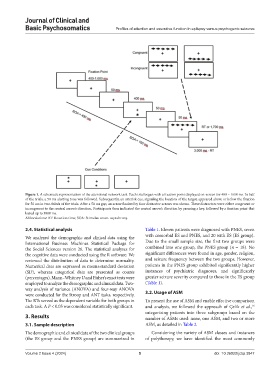
            Figure 1. A schematic representation of the attentional network task. Each trial began with a fixation point displayed on-screen for 400 – 1600 ms. In half
            of the trials, a 50 ms alerting tone was followed. Subsequently, an asterisk cue, signaling the location of the target, appeared above or below the fixation
            for 50 ms in two-thirds of the trials. After a 50 ms gap, an arrow flanked by four distractor arrows was shown. These distractors were either congruent or
            incongruent to the central arrow’s direction. Participants then indicated the central arrow’s direction by pressing a key, followed by a fixation point that
            lasted up to 3000 ms.
            Abbreviations: RT: Reaction time; SOA: Stimulus-onset. asynchrony.

            2.4. Statistical analysis                          Table 1. Eleven patients were diagnosed with PNES, seven
            We analyzed the demographic and clinical data using the   with comorbid ES and PNES, and 20 with ES (ES group).
            International Business Machines Statistical Package for   Due to the small sample size, the first two groups were
            the  Social Sciences version  26. The statistical analyses for   combined into one group, the PNES group (n = 18). No
            the cognitive data were conducted using the R software. We   significant differences were found in age, gender, religion,
            reviewed the distribution of data to determine normality.   and seizure frequency between the two groups. However,
            Numerical data are expressed as mean±standard deviation   patients in the PNES group exhibited significantly higher
            (SD), whereas categorical data are presented as counts   instances of psychiatric diagnoses, and significantly
            (percentages). Mann–Whitney U and Fisher’s exact tests were   greater seizure severity compared to those in the ES group
            employed to analyze the demographic and clinical data. Two-  (Table 1).
            way analysis of variance (ANOVA) and four-way ANOVA
            were conducted for the Stroop and ANT tasks, respectively.   3.2. Usage of ASM
            The RTs served as the dependent variable for both groups in   To present the use of ASM and enable effective comparison
            each task. A P < 0.05 was considered statistically significant.  and analysis, we followed the approach of Çelik  et al.,
                                                                                                            16
                                                               categorizing patients into three subgroups based on the
            3. Results                                         number of ASMs used: none, one ASM, and two or more

            3.1. Sample description                            ASM, as detailed in Table 2.
            The demographic and clinical data of the two clinical groups   Considering the variety of ASM classes and instances
            (the ES group and the PNES group) are summarized in   of polytherapy, we have identified the most commonly


            Volume 2 Issue 4 (2024)                         5                               doi: 10.36922/jcbp.3847

