


Page 75 - JCBP-2-4
P. 75
Journal of Clinical and
            Basic Psychosomatics                  Profiles of attention and executive function in epilepsy versus psychogenic seizures


            clonazepam,  fluoxetine,  quetiapine,  hydrocortisone,   (congruent - incongruent; t(29) = −5.276, P < 0.001). In
            clozapine, hydroxychloroquine, and sertraline.     addition, they were significantly slower in the incongruent
                                                               conditions compared to the neutral conditions (interference
            3.3. Cognitive functions                           effect) (incongruent - neutral; t(29) = 5.208, P < 0.001). In

            From the initial 38  patients, 35 completed the Stroop   contrast, patients in the PNES group were significantly
            task, and 34 completed the ANT. In the Stroop task, four   slower in the incongruent conditions than in the congruent
            patients (two patients with ES and two with PNES only)   conditions (Stroop effect) (congruent  -  incongruent;
            were excluded from the final analysis as outliers: three   t(29) = −2.886,  P  = 0.019).  Patients in the PNES group
            patients due to their mean accuracy being more than 2.5   showed no differences in RT between the incongruent and
            SD from their group mean accuracy and one patient due   neutral conditions (incongruent - neutral; t(29) = 2.258,
            to their mean RT being more than 2.5 SD compared to   P  = 0.078). Similarly, no difference was found in the
            their group mean RT. Similarly, in the ANT, five patients   interference effect between the two groups (t[29] = 1.828,
            (two patients with ES, two with PNES only, and one patient   P = 0.078).
            with PNES and ES) were removed from the final analysis   3.3.2. Executive functions (ANT)
            for similar reasons: four due to their mean accuracy being
            more than 2.5 SD from their group mean accuracy and one   A four-way ANOVA was conducted with the group as a
            due to their mean RT is more than 2.5 SD compared to   between-groups factor for each variable network index;
            their group mean RT. Consequently, a total of 31 patients   (executive control; congruent and incongruent), (alerting;
            remained for the final Stroop analysis, with 17 patients in   tone  and  non-tone)  and  (orienting;  valid,  no-cue,  and
            the ES group and 14 in the PNES group. For the final ANT   invalid). Significant main effects were revealed for each
            analysis, 29 patients were included, comprising 15 patients   attentional network index (executive control, alerting, and
                                                                                                    2
            in the ES group and 14 in the PNES group.          orienting): F(1, 27) = 36.23, P <0.001,  n  < 0.001;
                                                                                                    p
                                                                                     2
                                                               F(1, 27) = 21.39, P < 0.001, n  = 0.442; and F(2, 54) = 11.52,
            3.3.1. Attention control (Stroop task)                                   p
                                                                          2
                                                               P < 0.001,  n  = 0.299, respectively. The group × tone
                                                                          p
            Two-way ANOVA for RTs revealed a significant effect for   interaction was significant,  F(1, 27) = 5.67,  P  = 0.025,
            condition  (congruent, incongruent, and neutral)   n  = 0.174, reflecting the alerting network (Figure 3). In
                                                                2
                                                                p
                                   2
            (F[2, 58] = 26.45, P < 0.001, n  = 0.477), and no significant   contrast, no significant interaction was found for
                                   p
                                              2
            effect for group (F[1,29] = 0.00, P = 0.954, n  < 0.001). The
                                              p                group × flanker’s congruency interaction in the executive
                                                                                                     2
            interaction between condition and group was found to be   function comparison F(1, 27) = 1.04, P = 0.316 n  = 0.037.
                                                                                                      p
                                                  2
            non-significant (F[2, 58] = 2.61, P = 0.083,  n  = 0.082)   Similarly, the orienting comparison yielded a non-
                                                  p
            (Figure 2). Post hoc contrast analysis revealed that patients   significant effect for group × cue validity interaction
                                                                                      2
            in the ES group were significantly slower in the incongruent   F(2, 54) = 0.19, P = 0.825,  n  = 0.007. The three-way and
                                                                                      p
            conditions than in the congruent conditions (Stroop effect)   four-way interactions were not significant (P > 0.05).


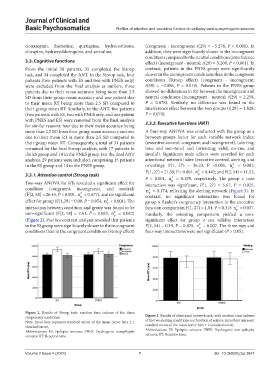
            Figure  2. Results of Stroop task: reaction time indexes of the three
            congruency conditions                              Figure 3. Results of attentional network task, with reaction time indexes
            Note: Error bars represent standard errors of the mean (error bars ± 1   of the two alerting conditions as a function of seizure. Error bars represent
            standard error).                                   standard errors of the mean (error bars ± 2 standard error).
            Abbreviations: ES: Epileptic seizures; PNES: Psychogenic nonepileptic   Abbreviations: ES: Epileptic seizures; PNES: Psychogenic non-epileptic
            seizures; RT: Reaction time.                       seizures; RT: Reaction time.


            Volume 2 Issue 4 (2024)                         7                               doi: 10.36922/jcbp.3847

