


Page 16 - JCBP-3-1
P. 16
Journal of Clinical and
            Basic Psychosomatics                                                    Somatic symptom disorder etiology


                                                               transmission. After testing the involvement of CA3 region
                                                               hippocampal neurons in the pain perception of rats,
                                                               Li  et al. noted, “there is substantial evidence indicating
                                                               that the hippocampal formation is involved in pain
                                                               processing”. 98,p.559  The authors suggest that hippocampal
                                                               mAChR involvement in pain processing enhances organism
                                                               survival because it facilitates learning and memory
                                                               about how to avoid reinjury from noxious or dangerous
                                                               situations. In a very recent study, Mueller et al.  identified
                                                                                                    82
                                                               ACh’s role in allowing the PNS to remain over-activated,
                                                               triggering inflammation. Along with nAChRs, mAChRs,
                                                               and GABAergic receptors on neurons in the hippocampus
                                                               are NMDA receptors  (Figure 2). Because of interactions
                                                                                99
                                                               between these four receptors, response to trauma affects
                                                               not only memory but also pain perception. 46,59,82  When
                                                               ACh binds with mAChRs, one result is that glutamate is
                                                               released. Glutamate not only binds with its own receptors
                                                               but also NMDA receptors. 100,101  NMDA receptors are the
                                                               primary activators of neuropathic SNS pain activation. 59,70,82
                                                                 In the case of inescapable trauma, a hypocortisol
                                                               condition allows normal ACh activation of mAChRs,
                                                               preventing excessive glutamate release, so NMDA receptors
                                                               and the SNS are not turned “on.” Furthermore, early in any
                                                               trauma response, SIA is triggered by catecholamines that
                                                               stimulate both CRH production, and turn “on” mAChRs in
                                                               the nucleus raphe magnus of the spine.  SIA in the nucleus
                                                                                             66
                                                               raphe magnus benefits an organism by suppressing pain but
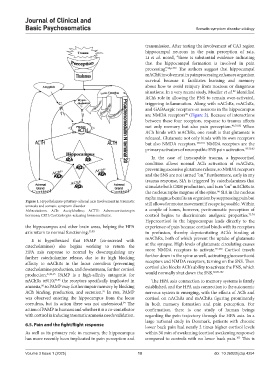
            Figure 1. Hypothalamus-pituitary-adrenal axis involvement in traumatic   still allows for motor movement if escape is possible. Within
            amnesia and somatic symptom disorder
            Abbreviations: ACh: Acetylcholine; ACTH: Adrenocorticotropin   a couple of hours, however, peritraumatic perception of
            hormone; CRH: Corticotropin-releasing hormone/factor.  control begins to discriminate analgesic properties. 73,74
                                                               Hypercortisol in the hippocampus leads directly to the
            the hippocampus and other brain areas, helping the HPA   experience of pain because cortisol binds with its receptors
            axis return to normal functioning. 55,83           in profusion, thereby depotentiating ACh’s binding at
              It  is hypothesized  that  PAMP  (co-secreted with   mAChRs, both of which prevent the uptake of glutamate
            catecholamines) also begins working to return the   at the synapse. High levels of glutamate circulating causes
            HPA axis response to normal by downregulating any   more NMDA receptors to activate. 59,100  Cortisol travels
            further  catecholamine  release,  due  to  its  high  blocking   further down in the spine as well, activating glucocorticoid
            affinity to nAChRs in the locus coeruleus (preventing   receptors and NMDA receptors, turning on the SNS. Then
            catecholamine production, and downstream, further cortisol   cortisol also blocks ACh’s ability to activate the PNS, which
            production. 87,94,95  PAMP is a high-affinity antagonist for   would normally shut down the SNS. 82,89,102
            nAChRs  α9/10, 85,86  the receptors specifically implicated in   The HPA axis connection to memory systems is firmly
            amnesia,  so PAMP may further impair memory by blocking   established, and the HPA axis connection to the autonomic
                   96
            ACh binding, production, and secretion.  In rats, PAMP   nervous system is emerging, with the effects of ACh and
                                             97
            was observed entering the hippocampus from the locus   cortisol on nAChRs and mAChRs figuring prominently
            coeruleus, but its action there was not understood.  The   in both memory formation and pain perception. For
                                                     94
            action of PAMP in humans and whether it is a co-contributor   confirmation, there is one study of human beings
            with cortisol in inducing traumatic amnesia needs validation.  regarding the pain trajectory through the HPA axis. In a
                                                               large national study in Denmark, patients with chronic
            6.5. Pain and the fight/flight response            lower back pain had nearly 2 times higher cortisol levels

            As well as its primary role in memory, the hippocampus   within 30 min of awakening (cortisol awakening response)
            has more recently been implicated in pain perception and   compared to controls with no lower back pain.  This is
                                                                                                      103

            Volume 3 Issue 1 (2025)                         10                              doi: 10.36922/jcbp.4254

