


Page 19 - JCBP-3-1
P. 19
Journal of Clinical and
            Basic Psychosomatics                                                    Somatic symptom disorder etiology


            compared to normal controls, but they overvalue body   elevated PAMP co-secretion, further preventing ACh binding
            messages. 3                                        with nAChRs in the hippocampus – augmenting amnesia. In
                                                               the spinal dorsal root horn, PAMP competes with ACh to
            8.2. T-A-P model                                   bind with mAChRs and competes with endorphins to bind

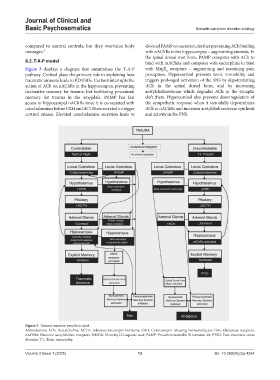
            Figure  3 displays a diagram that summarizes the T-A-P   with  MrgX   receptors  –  augmenting  and  sustaining  pain
                                                                        2
            pathway. Cortisol plays the primary role in explaining how   perception. Hypercortisol prevents tonic immobility and
            traumatic amnesia leads to PD/FSDs. Cortisol interrupts the   triggers prolonged activation of the SNS by depotentiating
            action of ACh on nAChRs in the hippocampus, preventing   ACh in the spinal dorsal horn, and by increasing
            declarative memory for trauma, but facilitating procedural   acetylcholinesterase which degrades ACh in the synaptic
            memory for trauma in the amygdala. PAMP has fast   cleft there. Hypercortisol also prevents downregulation of
            access to hippocampal nAChRs since it is co-secreted with   the sympathetic response when it steroidally depotentiates
            catecholamines before CRH and ACTH are secreted to trigger   ACh at nAChRs and increases acetylcholinesterase synthesis
            cortisol release. Elevated catecholamine secretion leads to   and activity in the PNS.


            Figure 3. Trauma-amnesia-pain flow chart
            Abbreviations: ACh: Acetylcholine; ACTH: Adrenocorticotropin hormone; CRH: Corticotropin-releasing hormone/factor; GRs: Glutamate receptors;
            nAChRs: Nicotinic acetylcholine receptors; NMDA: N-methyl-D-aspartic acid; PAMP: Proadrenomedullin N terminal-20; PTSD: Post-traumatic stress
            disorder; T.I.: Tonic immobility.

            Volume 3 Issue 1 (2025)                         13                              doi: 10.36922/jcbp.4254

