


Page 8 - JCTR-10-1
P. 8
4                         Lv et al. | Journal of Clinical and Translational Research 2024; 10(1): 1-8
        the statistical analyses. Results with a P < 0.05 were considered   lung  infection,  cranial  spinal  fluid  leakage,  surficial  wound
        statistically significant.                              infection, dysphagia, and instrument failure in both groups, but the
                                                                occurrence rate significantly differed between the two groups. Four
        3. Results                                              instrument failures occurred in the ASF group, including dislodged
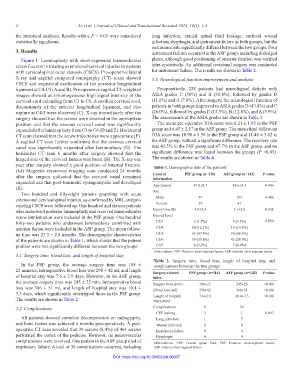
          Figure 1. Laminoplasty with short-segmental transpedicular   plates, although good positioning of anterior fixation was verified
        screw fixation in treating extensional cervical injuries in patients   intra-operatively. An additional revisional surgery was conducted
        with cervical spinal canal stenosis (CSCS). Pre-operative lateral   for instrument failure. The results are shown in Table 2.
        X-ray and sagittal computed tomography (CT) scans showed   3.3. Neurological function improvement and analysis
        CSCS and segmental ossification of the posterior longitudinal
        ligament at C4-C5 (A and B). Pre-operative sagittal T2-weighted   Preoperatively,  258  patients  had  neurological  deficits  with
        images showed an inhomogeneous high signal intensity of the   ASIA  grades  C  (50%)  and  B  (31.4%),  followed  by  grades  D
        cervical cord extending from C3 to C6. A swollen cervical cord,   (11.6%) and A (7.0%). After surgery, the neurological function of
        discontinuity of the anterior longitudinal ligament, and disc   patients in both groups improved to ASIA grades D (43.8%) and C
        rupture at C4/5 were observed (C). X-ray immediately after the   (26.0%), followed by grades E (13.5%), B (12.8%), and A (3.9%).
        surgery showed that the screws were inserted in the appropriate   The assessments of the ASIA grades are shown in Table 3.
        position and that the osseous cervical canal was significantly   The mean pre-operative JOA score was 6.21 ± 1.85 in the PSF
        expanded after laminoplasty from C3 to C6 (D and E). Horizontal   group and 6.45 ± 2.17 in the ASF group. The mean final follow-up
        CT scan showed that the screw trajectories were appropriate (F).   JOA score was 10.90 ± 3.56 in the PSF group and 11.48 ± 3.62 in
        A sagittal CT scan further confirmed that the osseous cervical   the ASF group, without a significant difference. The recovery rate
        canal  was  significantly  expanded  after  laminoplasty  (G). The   was 43.5% in the PSF group and 47.7% in the ASF group, and no
        horizontal CT scan 6  months after surgery showed that the   significant difference was found between the groups (P >0.05).
        hinged side of the cervical lamina was fused (H). The X-ray one   The results are shown in Table 4.
        year after surgery showed a good position of internal fixation.   Table 1. Demographic data of the patients
        (I-J)  Magnetic  resonance  imaging  scan  conducted  24  months
        after the surgery indicated that the cervical canal remained   General   PSF group (n=116)  ASF group (n=142)  P‑value
                                                                 information
        expanded and that post-traumatic syringomyelia had developed   Age (years)  47.8±8.7      48.6±8.2      0.446
        (K).
          Two  hundred  and  fifty-eight  patients  grappling  with  acute   Sex
        extensional cervical spinal injuries, as confirmed by MRI, and pre-  Male   87              101         0.486
        existing CSCS were followed up. One hundred and sixteen patients   Female   29              41
        who underwent posterior laminoplasty and received transpedicular   Injury time (h)  4.9±2.4  5.1±2.9    0.548
        screw implantation were included in the PSF group. One hundred   Injured level
        forty-two patients who underwent  laminoplasty  combined  with   C2/3     2 (1.7%)        5 (3.5%)      0.850
        anterior fusion were included in the ASF group. The mean follow-  C3/4   14 (12.1%)      19 (13.4%)
        up time was 23.5 ± 2.8 months. The demographic characteristics   C4/5    55 (47.4%)      70 (49.3%)
        of the patients are shown in Table 1, which shows that the patient   C5/6  39 (33.6%)    41 (28.9%)
        profiles were not significantly different between the two groups.  C6/7   6 (5.2%)        7 (4.9%)
                                                                 Abbreviations: PSF: Posterior short-segment fusion, ASF: Anterior short segment fusion
        3.1. Surgery time, blood loss, and length of hospital stay
                                                                 Table  2. Surgery time, blood loss,  length of hospital stay, and
          In  the  PSF  group,  the  average  surgery  time  was  188  ±   complications between the two groups
        23 minutes, intraoperative blood loss was 298 ± 42 ml, and length   Surgery‑related   PSF group (n=116)  ASF group (n=142)  P‑value
        of hospital stay was 7.6 ± 2.9 days. However, in the ASF group,   index
        the average surgery time was 245 ± 25 min, intraoperative blood   Surgery time (min)  188±23  245±25   <0.001
        loss  was  366  ±  51  ml,  and  length  of  hospital  stay  was  10.4  ±   Blood loss (ml)  298±42  366±51  <0.001
        3.3 days, which significantly outstripped those in the PSF group.   Length of hospital   7.6±2.9  10.4±3.3  <0.001
        The results are shown in Table 2.                        stay (days)

        3.2. Complications                                       Complications        6              24
                                                                  CSF leaking         3               1         0.043
          All patients showed complete decompression on radiography,   Lung infection  1              7
        and bone fusion was achieved 6 months postoperatively. A post-  Wound infection  2            8
        operative CT scan revealed that 39 screws (8.4%) of 464 screws   Instrument failure  0        4
        perforated the cortex of the pedicles. However, no neurovascular   Dysphagia  0               4
        complications were involved. One patient in the ASF group died of   Abbreviations:  CSF:  Cranial  spinal  fluid,  PSF:  Posterior  short-segment  fusion,
        respiratory failure. A total of 30 complications occurred, including   ASF: Anterior short segment fusion
                                                DOI: https://doi.org/10.36922/jctr.00037

