


Page 7 - JCTR-10-2
P. 7
Dinaki et al. | Journal of Clinical and Translational Research 2024; 10(2): 99-111   101
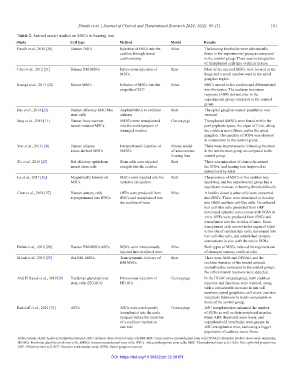
        Table 2. Animal model studies on MSCs in hearing loss
        Study                 Cell type            Method               Model         Results
        Pandit et al., 2011 [20]  Human OSCs       Injection of OSCs into the   Mice  The hearing thresholds were substantially
                                                   cochlea through lateral            lower in the experimental group as compared
                                                   cochleostomy                       to the control group. There was no integration
                                                                                      of transplanted cells into cochlear tissues.
        Choi et al., 2012 [21]  Human BM-MSCs      Intravenous injection of   Rats    Most of the injected MSCs were located in the
                                                   MSCs                               lungs and a small number were in the spiral
                                                                                      ganglion region.
        Kasagi et al., 2013 [22]  Mouse MSCs       Infusion of MSCs into the   Mice   MSCs moved to the cochlea and differentiated
                                                   ampulla of SCC                     into fibrocytes. The auditory brainstem
                                                                                      response (ABR) did not alter in the
                                                                                      experimental group compared to the control
                                                                                      group.
        Bas et al., 2014 [23]  Human olfactory MSC-like   Applied MSCs to cochlear   Rats  The spiral ganglion neuron population was
                               stem cells          cultures                           restored.
        Jang et al., 2015 [11]  Human bone marrow   hMSCs were transplanted   Guinea pigs  Transplanted hMSCs were found within the
                               neural-induced MSCs  into the scala tympani of         perilymphatic space, the organ of Corti, along
                                                   damaged cochlea                    the cochlear nerve fibers, and in the spiral
                                                                                      ganglion. The quantity of SGNs was elevated
                                                                                      in comparison to the control group.
        Yoo et al., 2015 [24]  Human adipose       Intraperitoneal injection of   Mouse model   There were improvements in hearing function
                               tissue-derived MSCs  hMSCs                of autoimmune   in the intervention group as compared to the
                                                                         hearing loss  control group.
        Xu et al., 2016 [25]   Rat olfactory epithelium   Stem cells were injected   Rats  There was migration of stem cells around
                               neural stem cells   straight into the cochlea          the SGNs, and hearing loss improved as
                                                                                      determined by ABR.
        Le et al., 2017 [26]   Magnetically labeled rat   MSCs were injected into the   Rats  The presence of MSCs in the cochlea was
                               MSCs                systemic circulation               identified, and the experimental group had a
                                                                                      significant increase in hearing threshold levels.
        Chen et al., 2018 [27]  Human urinary cells   OEPs were produced from   Mice  A healthy donor’s urine cells were converted
                               reprogrammed into iPSCs  iPSCs and transplanted into   into iPSCs. These were stimulated to develop
                                                   the cochlea of mice                into OEPs and hair cell-like cells. Co-cultured
                                                                                      hair cell-like cells generated from OEP
                                                                                      developed synaptic connections with SGNs in
                                                                                      vitro. OEPs were produced from iPSCs and
                                                                                      transplanted into the cochlea of mice. Some
                                                                                      transplanted cells moved in the organ of Corti
                                                                                      to the site of resident hair cells, developed into
                                                                                      hair cell-like cells, and established synaptic
                                                                                      connections in vivo with the native SGNs.
        Betini et al., 2018 [28]  Human BM-MSCs ASCs  MSCs were intravenously   Mice  Both types of MSCs induced the regeneration
                                                   injected into deafened mice        of damaged sensory cochlear cells.
        Mittal et al., 2019 [29]  Rat BM- MSCs     Transtympanic delivery of   Rats   There were ABR and DPOAE, and the
                                                   BM MSCs                            cochlear function of the treated animals
                                                                                      normalized as compared to the control groups.
                                                                                      No inflammatory reactions were detected.
        Abd El Raouf et al., 2019[30]   Harderian gland-derived   Intravenous injection of   Guinea pigs  In the HG-SC-treated group, both cochlear
                               stem cells (HG-SCs)  HG-SCs                            structure and functions were restored, along
                                                                                      with a considerable increase in hair cell
                                                                                      numbers, spiral ganglionic cell count, and stria
                                                                                      vascularis thickness to levels comparable to
                                                                                      those of the control group.
        Radeloff et al., 2021 [31]  ASCs           ASCs were autologously   Guinea pigs  ASC transplantation enhanced the number
                                                   transplanted into the scala        of SGNs as well as their peripheral neurites.
                                                   tympani before the insertion       Mean ABR thresholds were lower, and
                                                   of a cochlear implant on           suprathreshold amplitudes were greater in
                                                   one side                           ASC-transplanted mice, indicating a bigger
                                                                                      population of auditory nerve fibers.
        Abbreviations: ABR: Auditory brainstem response; ASC: Adipose tissue-derived stem cell; BM-MSC: Bone marrow mesenchymal stem cell; DPOAE: Distortion product otoacoustic emissions;
        HG-SCs: Harderian gland-derived stem cells; hMSCs: human mesenchymal stem cells; iPSCs: induced pluripotent stem cells; MSC: Mesenchymal stem cell; OEPs: Otic epithelial progenitors;
        OSC: Olfactory stem cell; SCC: Superior semicircular canal; SGNs: Spiral ganglion neurons.
                                                 DOI: https://doi.org/10.36922/jctr.22.00151

