


Page 43 - JCTR-10-4
P. 43
Biberstein et al. | Journal of Clinical and Translational Research 2024; 10(4): 263-268   265
        visualized under the baseplate and measured as the percentage   potentially  improve  tibial  implant  fixation  by  incorporating
        of the surface area of the tibial tray that was involved. Given   cementation  pockets  [15-20].  While  cement  pockets increase
        variable keel geometries and sizes between implants A and B,   the surface area for fixation, their ability to improve fixation has
        the area of the keel was subtracted from the area of the entire   yet to be demonstrated. In addition, there has been an increased
        baseplate  before  the  calculation  of percent  contamination   emphasis  on  improving  implant-cement  interface  fixation  as
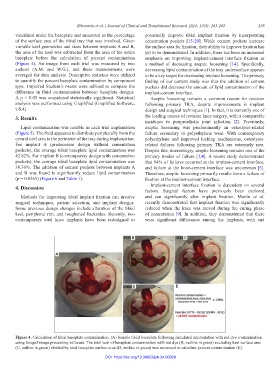
        (Figure  4). An image from each trial was measured by two   a method of decreasing  aseptic loosening [14].  Specifically,
        authors (A.M. and  W.G.), and these measurements  were   decreasing lipid contamination of the tray undersurface appears
        averaged for data analysis. Descriptive statistics were utilized   to be a key target for decreasing implant loosening. The primary
        to quantify the percent baseplate contamination by component   finding  of  our  current  study  was  that  the  addition  of  cement
        type. Unpaired Student’s t-tests were utilized to compare the   pockets did decrease the amount of lipid contamination of the
        difference  in  fluid  contamination  between  baseplate  designs.   implant-cement interface.
        A p < 0.05 was considered statistically significant. Statistical   Aseptic  loosening  remains  a  common  reason  for  revision
        analysis was performed using GraphPad (GraphPad Software,   following primary  TKA, despite improvements  in implant
        USA).                                                  design and surgical techniques [1]. In fact, it is currently one of
        3. Results                                             the leading causes of revision knee surgery, with a comparable
                                                               incidence  to periprosthetic  joint infection [2]. Previously,
          Lipid contamination was notable in each trial implantation   aseptic  loosening was predominantly  an  osteolysis-related
        (Figure 5). The fluid appeared to distribute peripherally from the   failure secondary to polyethylene  wear.  With contemporary
        central keel area to the perimeter of the tray during implantation.   polyethylene  and improved  locking mechanisms,  osteolysis-
        For implant  A (predecessor design without cementation   related  failures  following  primary  TKA  are  extremely  rare.
        pockets), the average tibial baseplate lipid contamination was   Despite this, interestingly, aseptic loosening remains one of the
        42.82%. For implant B (contemporary design with cementation   primary modes of failure  [3,4]. A  recent study demonstrated
        pockets), the average tibial baseplate lipid contamination was   that 94% of failures occurred at the implant-cement interface,
        30.36%. The addition of cement pockets between implants A   and failure at the bone-cement  interface  was  uncommon [5].
        and  B  was  found  to  significantly  reduce  lipid  contamination   Therefore, aseptic loosening primarily results from a failure of
        (p = 0.0265) (Figure 6 and Table 1).                   fixation at the implant-cement interface.

        4. Discussion                                            Implant-cement  interface  fixation  is  dependent  on  several
                                                               factors.  Surgical  factors  have  previously  been  explored
          Methods  for  improving  tibial  implant  fixation  can  involve   and  can  significantly  alter  implant  fixation.  Martin  et  al.
        surgical  techniques, patient  selection,  and  implant  designs.   recently  demonstrated  that  implant  fixation  was  significantly
        Some previous design changes include alteration of the tibial   reduced  when  the  knee  was moved  during  the  curing  phase
        keel, peripheral rim, and roughened backsides. Recently, two   of cementation  [9]. In addition,  they  demonstrated that  there
        contemporary total knee implants have been redesigned to   were  significant  differences  among  the  implants,  with  and


                                                         B                     C


                         A


                                                         D                  E


        Figure 4. Calculation of tibial baseplate contamination. (A) Sample tibial baseplate following simulated implantation with red dye contamination
        using ImageJ image processing software. The total sum of baseplate contamination with red dye (B, outline in green) excluding keel surface area
        (C, outline in green) divided by total baseplate surface area (D, outline in green) was measured to calculate percent contamination (E).
                                              DOI: https://doi.org/10.36922/jctr.24.00029

