


Page 38 - JCTR-10-4
P. 38
260                       Yoksa, et al. | Journal of Clinical and Translational Research 2024; 10(4): 256-262
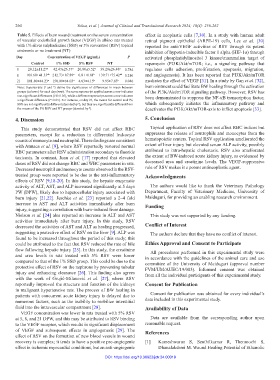
        Table 5. Effects of burn wound treatment on the serum concentration   effect in neoplastic cells [7,30]. In a study with human adult
        of vascular endothelial growth factor (VEGF) in albino rats treated   retinal  pigment  epithelial  (ARPE-19)  cells,  Lee  et  al.  [30]
        with 1% silver sulphadiazine (SSD) or 5% resveratrol (RSV) topical   reported  the  anti-VEGF  activities  of  RSV  through  its  potent
        ointments or no treatment (NT)                         inhibition of hypoxia-inducible factor 1 alpha (HIF-1ɑ) through
        Day          Concentration of VEGF (pg/mL)     P       activated  phosphatidylinositol  3  kinase/mammalian  target  of
              Control    1% SSD    5% RSV      NT              rapamycin  (PI3K/Akt/mTOR;  i.e.,  a  signaling  pathway  that
        5    20.12±11.27 a  42.47±26.57 a  20.80±5.52 a  39.20±26.48 a  0.784  regulates  cells  adhesion,  proliferation,  apoptosis,  migration,
        8   106.60±41.33 ab  212.73±87.89 a  0.81±0.81 b  139.71±75.42 ab  0.210  and angiogenesis). It has been reported that PI3K/Akt/mTOR
        21   101.80±44.23 a  150.09±64.03 a  4.63±4.15 b  9.95±7.83 b  0.046  mediates the effect of VEGF [31]. In a study by Gan et al. [32],
        Note:  Superscripts  (  and  )  define  the  significance  of  differences  in  mean  between   burn ointment could facilitate BW healing through the activation
                        b
                    a
        groups (column) for each day (row). The same superscript applied across a row indicates   of the PI3K/Akt/mTOR signaling pathway. However, RSV has
        non-significant differences (PS>0.05), while a different superscript across a row indicates   been demonstrated to suppress the NF-κB transcription factor,
        a significant difference (P<0.05). For instance, on day 21, the means for control and 1%
                                  a
        SSD are not significantly different (denoted by  ), but they are significantly different from   which  subsequently  initiates  the  inflammatory  pathway  and
        the means of the 5% RSV and NT groups (denoted by  ).  deactivates the PI3K/Akt/mTOR-axis to inflict apoptosis [33].
                                       b
        4. Discussion                                          5. Conclusion
          This  study  demonstrated  that  RSV  did  not  affect  RBC   Topical application of RSV does not affect RBC indices but
        parameters,  except  for  a  reduction  in  differential  leukocyte   suppresses the release of neutrophils and monocytes from the
        counts of monocyte and neutrophil. These findings are consistent   hematopoietic centers. Topical RSV application ameliorated the
        with Atmaca et al. [9], where RSV reportedly restored normal   extent of liver injury but elevated serum ALP activity, possibly
        RBC parameters after RSV administration secondary to fluoride   attributed  to intra-hepatic  cholestasis. RSV also ameliorated
        toxicosis.  In  contrast,  Juan  et al.  [17] reported that elevated   the extent of BW-induced acute kidney injury, as evidenced by
        doses of RSV did not change RBC and WBC parameters in rats.   decreased  urea  and  creatinine  levels.  The  VEGF-suppressive
        Decreased neutrophil and monocyte counts observed in the RSV-  role of RSV makes it a potent antineoplastic agent.
        treated group were reported to be due to the anti-inflammatory   Acknowledgments
        effects of RSV [9,18-20]. In this study, the hepatic enzymatic
        activity of ALT, AST, and ALP increased significantly at 5 days   The  authors  would  like  to  thank  the Veterinary  Pathology
        PW (DPW), likely due to hepatocellular injury associated with   Department,  Faculty  of  Veterinary  Medicine,  University  of
        burn injury  [21,22].  Jeschke  et al. [23]  reported  a  2–4  fold   Maiduguri, for providing an enabling research environment.
        increase  in  AST  and  ALT  activities  immediately  after  burn   Funding
        injury, suggesting a correlation with burn-induced liver damage.
        Nielson et al. [24] also reported an increase in ALT and AST   This study was not supported by any funding.
        activities  immediately  after  burn  injury.  In  this  study,  RSV
        decreased the activities of AST and ALT as healing progressed,   Conflict of Interest
        suggesting a protective effect of RSV on the liver [9]. ALP was   The authors declare that they have no conflict of interest.
        found to be increased throughout the period of this study; this
        could be attributed to the fact that RSV reduced the rate of bile   Ethics Approval and Consent to Participate
        flow following hepatic injury [25]. In this study, the creatinine   All  procedures  performed  in  this  experimental  study  were
        and  urea  levels  in  rats  treated  with  5%  RSV  were  lower   in accordance with the guidelines of the animal care and use
        compared to that of the 1% SSD group. This could be due to the   committee  of  the  University  of  Maiduguri  (approval  number
        protective effect of RSV on the nephrons by preventing tubular   FVM/UM/AUEC/19/003).  Informed  consent  was  obtained
        injury and enhancing clearance [26]. This finding also agrees   from all the individual participants of this experimental study.
        with  the  work  of  Grujić-Milanović  et  al.  [27],  where  RSV
        reportedly improved the structure and function of the kidneys   Consent for Publication
        in malignant hypertensive rats. The process of BW healing in
        patients with concurrent acute kidney injury is delayed due to   Consent for publication was obtained for every individual’s
        numerous factors, such as the inability to mobilize interstitial   data included in this experimental study.
        fluid into the intravascular compartment [28].         Availability of Data
          VEGF concentration was lower in rats treated with 5% RSV
        at 5, 8, and 21 DPW, and this may be attributed to RSV binding   Data  are  available  from  the  corresponding  author  upon
        to the VEGF receptor, which results in significant displacement   reasonable request.
        of  VEGF  and  subsequent  effects  in  angiogenesis  [29]. The   References
        effect of RSV on the formation of new blood vessels in wound
        recovery is complex; it tends to have a positive pro-angiogenic   [1]   Kameshwaran  S,  Senthilkumar  R,  Thenmozhi  S,
        effect in ischemic myocardial conditions, but an anti-angiogenic   Dhanalakshmi M. Wound Healing Potential of Ethanolic

                                              DOI: https://doi.org/10.36922/jctr.24.00019

