


Page 40 - JCTR-11-2
P. 40
Journal of Clinical and
            Translational Research                                            miRNA in pneumonia and pulmonary fibrosis


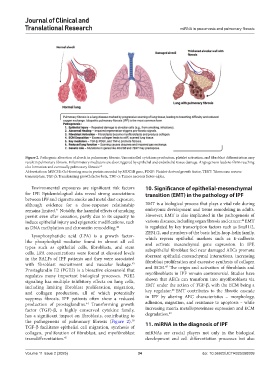
            Figure 2. Pathogenic alteration of alveoli in pulmonary fibrosis. Uncontrolled cytokines production, platelet activation, and fibroblast differentiation may
            result in pulmonary fibrosis. Inflammatory mediators are also triggered by epithelial and endothelial tissue damage. Angiogenesis leads to fibrin reaching
            clot formation and eventually pulmonary fibrosis. 68
            Abbreviations: MUC5B: Gel-forming mucin protein encoded by MUC5B gene, PDGF: Platelet-derived growth factor, TERT: Telomerase reverse
            transcriptase, TGF-β; Transforming growth factor beta; TNF-α: Tumor necrosis factor-alpha.

              Environmental  exposures  are  significant  risk  factors   10. Significance of epithelial-mesenchymal
            for IPF. Epidemiological data reveal strong associations   transition (EMT) in the pathology of IPF
            between IPF and cigarette smoke and metal dust exposure,
            although evidence for a dose-response relationship   EMT is a biological process that plays a vital role during
            remains limited.  Notably, the harmful effects of smoking   embryonic development and tissue remodeling in adults.
                         41
            persist even after cessation, partly due to its capacity to   However, EMT is also implicated in the pathogenesis of
                                                                                                        46
            induce epithelial injury and epigenetic modifications, such   various diseases, including organ fibrosis and cancer.  EMT
            as DNA methylation and chromatin remodeling. 42    is regulated by key transcription factors such as Snail1/2,
                                                               ZEB1/2, and members of the basic helix-loop-helix family,
              Lysophosphatidic acid (LPA) is a growth factor-  which repress epithelial markers such as E-cadherin
            like phospholipid mediator found in almost all cell   and activate mesenchymal gene expression. In IPF,
            types such as epithelial cells, fibroblasts, and stem   subepithelial fibroblast foci near damaged AECs promote
            cells. LPA concentrations were found at elevated levels   aberrant epithelial-mesenchymal interactions, increasing
            in the BALFs of IPF patients and they were associated
            with fibroblast recruitment and vascular leakage.    fibroblast proliferation and excessive synthesis of collagen
                                                         43
                                                                       47
            Prostaglandin E2 (PGE2) is a bioactive eicosanoid that   and ECM.  The origin and activation of fibroblasts and
            regulates many important biological processes. PGE2   myofibroblasts in IPF remain controversial. Studies have
            signaling has multiple inhibitory effects on lung cells,   shown that AECs can transform into myofibroblasts via
            including limiting fibroblast proliferation, migration,   EMT under the action of TGF-β, with the ECM being a
                                                                          48
            and collagen production, all of which potentially   key regulator. EMT contributes to the fibrotic cascade
            suppress fibrosis. IPF patients often show a reduced   in IPF by altering AEC characteristics – morphology,
            production of prostaglandins.  Transforming growth   adhesion, migration, and resistance to apoptosis – while
                                      44
            factor (TGF)-β, a highly conserved cytokine family,   increasing matrix metalloproteinase expression and ECM
            has a significant impact on fibroblasts, contributing to   degradation. 49
            the pathogenesis of pulmonary fibrosis (Figure  2). 28   11. miRNA in the diagnosis of IPF
            TGF-β facilitates epithelial cell migration, synthesis of
            collagen, proliferation of fibroblast, and myofibroblast   miRNAs are crucial players not only in the biological
            transdifferentiation. 45                           development and cell differentiation processes but also


            Volume 11 Issue 2 (2025)                        34                         doi: 10.36922/JCTR025080009

