


Page 22 - JCTR-11-3
P. 22
Journal of Clinical and
            Translational Research                                              Immunogenicity and safety of flu vaccines


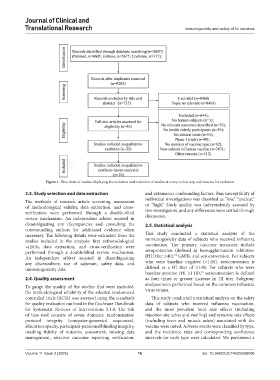
                     Figure 1. Flow chart of studies displaying the inclusion and exclusion of studies at every review step and reasons for exclusion

            2.3. Study selection and data extraction           and extraneous confounding factors. Bias susceptibility of
                                                               individual investigations was classified as “low,” “unclear,”
            The methods of research article screening, assessment   or “high.” Study quality was independently assessed by
            of methodological validity, data extraction, and cross-  two investigators, and any differences were settled through
            verification were performed through a double-blind   discussion.
            review mechanism. An independent arbiter assisted in
            disambiguating any discrepancies and consulting the   2.5. Statistical analysis
            corresponding authors for additional evidence when
            necessary. The following details were extracted from the   This  study  conducted  a  statistical  analysis  of  the
            studies  included  in  the  analysis: first authorodological   immunogenicity data of subjects who received influenza
            validity, data extraction, and cross-verification were   vaccination. The primary outcome measures include
            performed through a double-blind review mechanism.   seroprotection (defined as hemagglutination  inhibition
                                                                           12
            An independent arbiter assisted in disambiguating   [HI] titer ≥40),  GMTs, and seroconversion. For subjects
            any discreculture, use of adjuvant, safety data, and   who  were baseline negative (<1:10),  seroconversion  is
            immunogenicity data.                               defined as a HI titer of ≥1:40. For subjects who were
                                                                                      13
                                                               baseline positive (HI ≥1:10),  seroconversion is defined
            2.4. Quality assessment                            as four times or greater increase in HI titer. Subgroup
                                                               analyses were performed based on the common influenza
            To gauge the quality of the studies that were included,   virus strains.
            the methodological reliability of the selected randomized
            controlled trials (RCTs) was assessed using the standards   This study conducted a statistical analysis on the safety
            for quality evaluation outlined in the Cochrane Handbook   data  of subjects  who received  influenza  vaccination,
            for Systematic Reviews of Interventions 5.1.0. The risk   and the most prevalent local side effects (including
            of bias tool consists of seven domains: randomization   injection site aches and swelling) and systemic side effects
            protocol integrity (computer-generated sequences),   (including fever and muscle aches) associated with the
            allocation opacity, participant-personnel blinding integrity,   vaccine were noted. Adverse events were classified by type,
            masking  fidelity of  outcome  assessment,  missing  data   and  the incidence  rates  and corresponding  confidence
            management, selective outcome reporting verification,   intervals for each type were calculated. We performed a


            Volume 11 Issue 3 (2025)                        16                         doi: 10.36922/JCTR025060006

