


Page 42 - JCTR-11-4
P. 42
Journal of Clinical and
            Translational Research                                                        Physical exercise on COPD


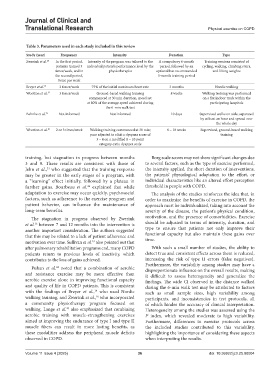
            Table 3. Parameters used in each study included in this review
            Study (year)   Frequency             Intensity               Duration               Type
            Zwerink et al. 16  In the first period,   Intensity of the program was tailored to the   A compulsory 6-month   Training sessions consisted of
                         patients trained 3   individual patient’s performance level by the   period, followed by an   cycling, walking, climbing stairs,
                        times/week, and in     physiotherapist     optional but recommended   and lifting weights
                         the second period,                         5-month training period
                          twice per week
            Breyer et al. 14  3 times/week  75% of the initial maximum heart rate  3 months  Nordic walking
            Wootton et al. 17  3 times/week  Ground-based walking training   8 weeks   Walking training was performed
                                       commenced at 30 min duration, speed set         on a flat indoor track within the
                                      at 80% of the average speed achieved during         participating hospitals
                                              the 6-min walk test
            Behnke et al. 15  Not informed      Not informed              10 days     Supervised walks on aisle, separated
                                                                                      by at least an hour and spread over
                                                                                             the whole day
            Wootton et al. 18  2 or 3 times/week  Walking training commenced at 30 min;   8 – 10 weeks  Supervised, ground-based walking
                                       pace adjusted to elicit a dyspnea score of              training
                                          3 – 4 on a modified 0 – 10 point
                                           category-ratio dyspnea scale

            training, but stagnation in progress between months   Borg scale scores may not show significant changes due
            3 and 9. These results are consistent with those of   to several factors, such as the type of exercise performed,
            Jehn et al.,  who suggested that the training response   the intensity applied, the short duration of interventions,
                     21
            may be greater in the early stages of a program, with   the patients’ physiological adaptation to the effort, or
            a “learning” effect initially, followed by a plateau in   individual characteristics like an altered effort perception
                                      22
            further gains. Bourbeau  et  al.  explained that while   threshold in people with COPD.
            adaptation to exercise may occur quickly, psychosocial   The analysis of the studies reinforces the idea that, in
            factors, such as adherence to the exercise program and   order to maximize the benefits of exercise in COPD, the
            patient  behavior, can influence the  maintenance  of   approach must be individualized, taking into account the
            long-term benefits.                                severity of the disease, the patient’s physical condition,
              The stagnation in progress observed by Zwerink   motivation, and the presence of comorbidities. Exercise
                16
            et al.  between 7 and 12 months into the intervention is   should be adjusted in terms of intensity, duration, and
            another important consideration. The authors suggested   type  to  ensure that  patients  not only  improve their
            that this may be related to a lack of patient adherence and   functional capacity but also maintain these gains over
            motivation over time. Sullivan et al.  also pointed out that   time.
                                        23
            after pulmonary rehabilitation programs end, many COPD   With such a small number of studies, the ability to
            patients return to previous levels of inactivity, which   detect true and consistent effects across them is reduced,
            contributes to the loss of gains achieved.         increasing the risk of type  II errors (false negatives).
                                                               Furthermore, the variability among studies may have a
              Puhan  et al.  noted that a combination of aerobic   disproportionate influence on the overall results, making
                         24
            and  resistance  exercise  may  be  more  effective  than   it difficult to assess heterogeneity and generalize the
            aerobic exercise alone in improving functional capacity   findings. The wide CI observed in the distance walked
            and quality of life in COPD patients. This is consistent   during the 6-min walk test may be attributed to factors
            with the findings of Breyer  et al.,  who used Nordic   such as small sample sizes, high variability among
                                         14
            walking training, and Zwerink et al.,  who incorporated   participants,  and inconsistencies in  test protocols,  all
                                          16
            a community physiotherapy program focused on       of which hinder the accuracy of clinical interpretation.
            walking. Lange et al.  also emphasized that combining   Heterogeneity among the studies was assessed using the
                             20
            aerobic training with muscle-strengthening exercises   I  index, which revealed moderate to high variability.
                                                                2
            aimed at improving the endurance of type I and type II   Furthermore, differences in exercise protocols across
            muscle fibers can result in more lasting benefits, as   the  included studies  contributed to  this variability,
            these modalities address the peripheral muscle deficits   highlighting the importance of considering these aspects
            observed in COPD.                                  when interpreting the results.


            Volume 11 Issue 4 (2025)                        36                            doi: 10.36922/jctr.25.00004

