


Page 83 - JCTR-11-4
P. 83
Journal of Clinical and
            Translational Research                                       NADPH oxidase inhibition in a rodent stroke model


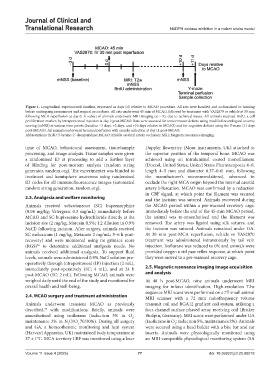
            Figure 1. Longitudinal experimental timeline, expressed as days (d) relative to MCAO procedure. All rats were handled and acclimatized to housing
            before undergoing assessments and surgical procedures. All rats underwent 45 min of MCAO, followed by treatment with VAS2870 or vehicle at 30 min
            following MCA reperfusion at day 0. A subset of animals underwent MRI imaging (n = 9), due to technical issues. All animals received BrdU, a cell
            proliferation marker, by intraperitoneal injection at day 2 post-MCAO. Rats were assessed for sensorimotor deficits using modified neurological severity
            scoring (mNSS) at various time points (baseline −3 days, +2 days, and +10 days relative to MCAO) and for cognitive deficits using the Y-maze (11 days
            post-MCAO). All animals underwent terminal perfusion with sample collection at day 11 post-MCAO.
            Abbreviations: BrdU: 5-bromo-2’-deoxyuridine; MCAO: Middle cerebral artery occlusion; MRI: Magnetic resonance imaging.

            time of MCAO, behavioural assessment, tissue/sample   Doppler flowmetry (Moor Instruments, UK) attached to
            processing, and image analysis. Tissue samples were given   the superior position of the temporal bone. MCAO was
            a randomised ID at processing to add a further layer   achieved using an intraluminal coated monofilament
            of blinding for post-mortem analysis (random string   (Doccol, United States; United States Pharmacopoeia 4–0,
            generator, random.org). The experimenter was blinded to   length  4–5  mm  and  diameter  0.37–0.41  mm,  following
            treatment and hemisphere awareness using randomised   the manufacturer’s recommendations), advanced to
            ID codes for all immunofluorescence images (automated   occlude the right MCA origin beyond the internal carotid
            random string generation, random.org).             artery bifurcation. MCAO was confirmed by a reduction
                                                               in CBF signal, at which point the filament was secured
            2.3. Analgesia and welfare monitoring              and the incision was sutured. Animals recovered during
            Animals received subcutaneous (SC) buprenorphine   the MCAO period within a pre-warmed recovery cage.
            (0.04  mg/kg; Vetergesic 0.3  mg/mL) immediately before   Immediately before the end of the 45-min MCAO period,
            MCAO and SC bupivacaine hydrochloride directly at the   the animal was re-anaesthetised and the filament was
            incision site (2 mg/kg; Marcain 0.5%; 1:2 dilution in 0.9%   removed. The artery was ligated using silk sutures, and
            NaCl) following incision. After surgery, animals received   the incision was sutured. Animals remained under GA.
            SC meloxicam (1 mg/kg; Metacam 2 mg/mL; 5–6 h post-  At 30  min post-MCA reperfusion, vehicle or VAS2870
            recovery) and were monitored using rat grimace score   treatment was administered intravenously by tail vein
            (RGS)  to determine additional analgesia needs. No   injection. Isoflurane was reduced to 0% and animals were
                 56
            animals  received  additional  analgesia. To  support  fluid   provided oxygen until paw reflex response, at which point
            levels, animals were administered 0.9% NaCl solution pre-  they were moved to a pre-warmed recovery cage.
            operatively through intraperitoneal (IP) injection (2 mL),
            immediately post-operatively (SC; 4  mL), and at 24  h   2.5. Magnetic resonance imaging image acquisition
            post-MCAO (SC; 2 mL). Following MCAO, animals were   and analysis
            weighed daily until the end of the study and monitored for   At 48  h post-MCAO, nine animals underwent MRI
            overall health and well-being.                     imaging for infarct identification. High-resolution T2w
                                                               sequence MRI scans were performed on a 7T small animal
            2.4. MCAO surgery and treatment administration     MRI scanner with a 72  mm  radiofrequency volume
            Animals underwent transient MCAO as previously     transmit coil and BGA12 gradient coil system, utilising a
                    57
            described,  with modifications. Briefly, animals were   four-channel surface phased array receiving coil (Bruker
            anaesthetised using isoflurane (induction 5% in O ;   BioSpin, Germany). MRI scans were performed under GA
                                                         2
            maintenance 2% in N O/O 70/30%). During all surgery   (Isoflurane in O : induction 5%, maintenance 2%). Animals
                                  2
                                                                           2
                              2
            and GA, a homeothermic  monitoring and heat system   were secured using a head holder with a bite bar and ear
            (Harvard Apparatus, UK) maintained body temperature at   inserts. Animals were physiologically monitored using
            37 ± 1°C. MCA territory CBF was monitored using a laser   an MRI-compatible physiological monitoring system (SA
            Volume 11 Issue 4 (2025)                        77                            doi: 10.36922/jctr.25.00018

