


Page 88 - JCTR-11-4
P. 88
Journal of Clinical and
            Translational Research                                       NADPH oxidase inhibition in a rodent stroke model


            A                         B                        A                      B


                                                               C                      D
            C                       D


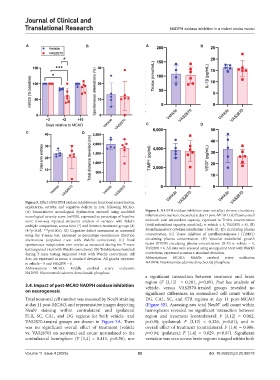
            Figure 3. Effect of NADPH oxidase inhibition on functional sensorimotor,
            exploration, activity, and cognitive deficits in rats, following MCAO.
            (A) Sensorimotor neurological dysfunction assessed using modified   Figure 4. NADPH oxidase inhibition does not affect chronic circulatory
            neurological severity score (mNSS), expressed as percentage of baseline   inflammatory markers, measured at day 11 post-MCAO. (A) Plasma small
            score (two-way repeated measures analysis of variance with Sidak’s   molecule total antioxidant capacity, expressed as Trolox concentration
            multiple comparison, across time (*) and between treatment groups (#)   (total antioxidant capacity; nmol/mL; n: vehicle = 4, VAS2870 = 6). (B)
            (#/*p<0.05, ***p<0.001). (B) Cognitive deficit assessment as measured   Proinflammatory cytokine interleukin-1 beta (IL-1β) circulating plasma
            using the Y-maze test, expressed as percentage spontaneous direction   concentration. (C) Tissue inhibitor of metalloproteinases-1 (TIMP1)
            alternations (unpaired  t-test with Welch’s corrections).  (C) Total   circulating plasma concentration. (D) Vascular endothelial growth
            spontaneous independent arm entries as measured during the Y-maze   factor (VEGF) circulating plasma concentration. (B-D)  n: vehicle = 5,
            test (unpaired t-test with Welch’s corrections). (D) Total distance travelled   VAS2870 = 6. All data were assessed using an unpaired t-test with Welch’s
            during Y-maze testing (unpaired  t-test with Welch’s corrections). All   corrections, expressed as mean ± standard deviation.
            data are expressed as mean ± standard deviation. All graphs represent   Abbreviations:  MCAO:  Middle  cerebral  artery  occlusion;
            n: vehicle = 5 and VAS2870 = 6.                    NADPH: Nicotinamide adenine dinucleotide phosphate.
            Abbreviations:  MCAO:  Middle  cerebral  artery  occlusion;
            NADPH: Nicotinamide adenine dinucleotide phosphate.
                                                               a significant interaction between treatment and brain
                                                               region  (F  [3,12]   =  0.201,  p=0.89).  Post hoc  analysis of
            3.4. Impact of post-MCAO NADPH oxidase inhibition   vehicle-  versus VAS2870-treated groups revealed no
            on neurogenesis                                    significant differences in normalised cell count within

            Total neuronal cell number was assessed by NeuN staining   DG, CA1, SC, and STR regions at day 11 post-MCAO
            at day 11 post-MCAO, and representative images depicting   (Figure 5B). Assessing raw total NeuN  cell count within
                                                                                              +
            NeuN staining within contralateral and ipsilateral   hemispheres revealed no significant interaction between
            STR, SC, CA1, and DG regions for both vehicle-  and   region and treatment (contralateral:  F  [3,12] = 0.062,
            VAS2870-treated groups are shown in  Figure  5A. There   p=0.98; ipsilateral:  F  [3,12] = 0.326,  p=0.81), and in
            was no significant overall effect of treatment (vehicle   overall effect of treatment (contralateral: F [1,4] = 0.006,
            vs.  VAS2870)  on  neuronal  cell  count  normalised  to the   p=0.94; ipsilateral:  F  [1,4] = 0.029,  p=0.87). Significant
            contralateral hemisphere (F [1,4] = 0.411,  p=0.56), nor   variation was seen across brain regions imaged within both


            Volume 11 Issue 4 (2025)                        82                            doi: 10.36922/jctr.25.00018

